

There is a phrase I hear from position coaches and coordinators probably more often than anything else in recruiting: "We're staying in touch." Every family with a kid on a college board has heard it. And I want to tell you what it means, and what it does not, depending on who says it.
The dead period runs through July 31. Six weeks in. Since late June, coaches across the country have been locked out of in-person evaluation and campus visits from recruits. What they have had is the phone. Texts. Email. The communication channel is open. The in-person channel is not.
That split matters for families right now, because the last six weeks of call activity is one of the most honest indicators of where an athlete sits on a program's board. Not the offers. Not the camp invites. The actual call pattern.
Who calls is the first thing to read
There is a hierarchy in college football recruiting contact, and it is not subtle once you know it.
A head coach calls the recruits he is genuinely committed to. He does not have unlimited time. He is managing a roster of 100-plus people, running a staff, and preparing for fall camp. When he picks up the phone and dials a 2027 prospect in early July, that call is a choice. It is a signal. Not every recruit on a board gets that call. The ones who do are not interchangeable with the ones who only hear from the position coach.
That is not a knock on position coaches. The position coach relationship is real and it matters. But there is a difference between a staff staying warm and a head coach personally staying engaged. Families sometimes conflate these two things, and programs allow them to because it keeps options open on the board.
Coordinators fall in the middle. An offensive coordinator who is calling every two weeks during the dead period is telling you that the position is a genuine priority and the head coach has told him to stay close to this family. That is meaningful. A coordinator call once in six weeks is professional courtesy.
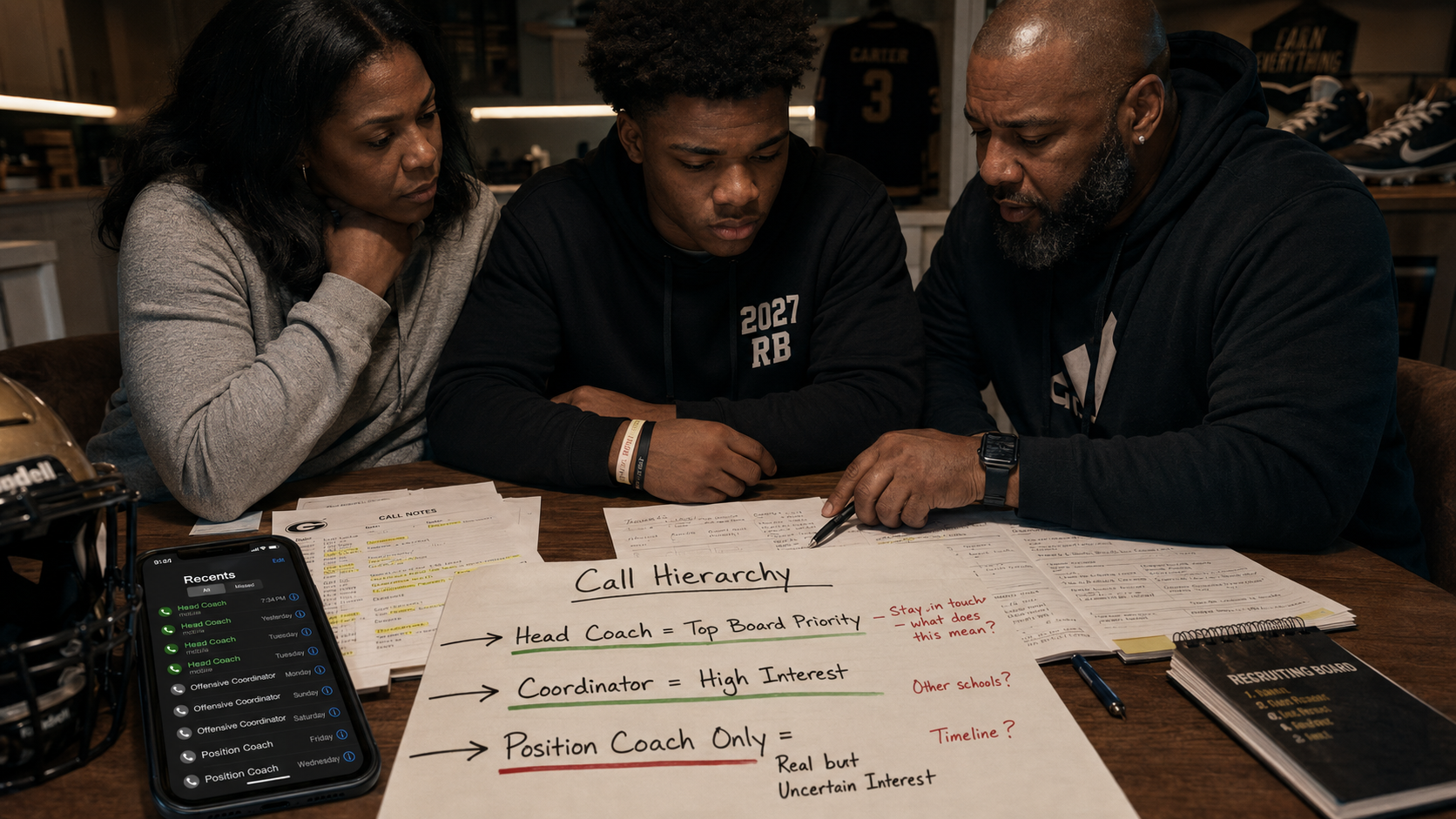
The call hierarchy, in plain terms: a head coach calling every week or two is a top-board target; a coordinator on a consistent cadence is high interest; a position coach only is real interest with uncertainty above it; nobody calling in the last three weeks is information a family cannot afford to ignore.
What "stay in touch" actually means
The phrase is worth unpacking on its own. I have heard it used by head coaches to mean "you are our number-one target at the position and we want to close this before camp." I have heard it used by position coaches to mean "we have one scholarship slot remaining and you are one of eight families we are maintaining relationships with." Same words. Completely different situations.
What separates them is context: the frequency leading up to that phrase, who said it, and what happened after. If a coordinator says "stay in touch" and the next call comes from the position coach two weeks later, the message has drifted down the chain. If a head coach says it and then personally calls the following Sunday, it is being reinforced from the top.
I also pay attention to what coaches ask about on those calls. Coaches who are genuinely close to pulling the trigger on a commitment ask specific questions: What other schools are in it? What is the family's timeline? When can your son be back on campus? These are questions from a staff that is trying to close, not just maintain. The generic calls, the "just checking in, how is your son doing" conversations without follow-up questions, those are maintenance. Maintenance is not nothing. It keeps a recruit on a list. But it is different from pursuit, and families deserve to know the difference.
The gap between the podium and the phone
Starting tomorrow, 16 coaches from the SEC will sit in front of cameras in Tampa for media days. Six of them are new to their programs this fall. Every one of them will say their recruiting class is a foundation, their offenses are improved, and they are excited about what is coming. That is what coaches say at media days. None of it is dishonest. It is just not specific to your athlete.
What is specific to your athlete is the call pattern sitting on his phone right now. Whether that program called three times in the last two weeks or once in June. Whether the head coach was on those calls or it has been the position coach every time. Whether the conversations have felt like pursuit or like position management.
Families with 2027 athletes on multiple boards are in a good position right now to compare, because the dead period has created six weeks of pure communication with no in-person contact to distract from the pattern. The dead period ends in 12 days. When coaches can evaluate in person again, the boards will start to move quickly. The question worth sitting with before that happens: does the call pattern from your top two or three programs match what those coaches have told you about where your son stands? Because one of those two things tends to be the more accurate picture.