

A fixed budget for a previously uncapped activity
For most of college football's history, there was no formal cap on how many days a program's staff could spend recruiting off campus. Programs could attend every game in a recruiting territory if the schedule allowed. The only constraints were time and travel budget. Informal limits, not regulatory ones.
That is changing.
The FBS Oversight Committee recommended in July that programs receive a yearly allotment of 300 off-campus recruiting days during winter and spring periods and 50 off-campus evaluation days during the fall. Up to 17 staff members (the head coach and 16 designated assistants) would be permitted to use those days. Schools would designate which assistants participate before each period begins. The recommendation is pending a final vote in August 2026, with implementation targeted for January 1, 2027.
Why the 50-day fall evaluation allotment matters
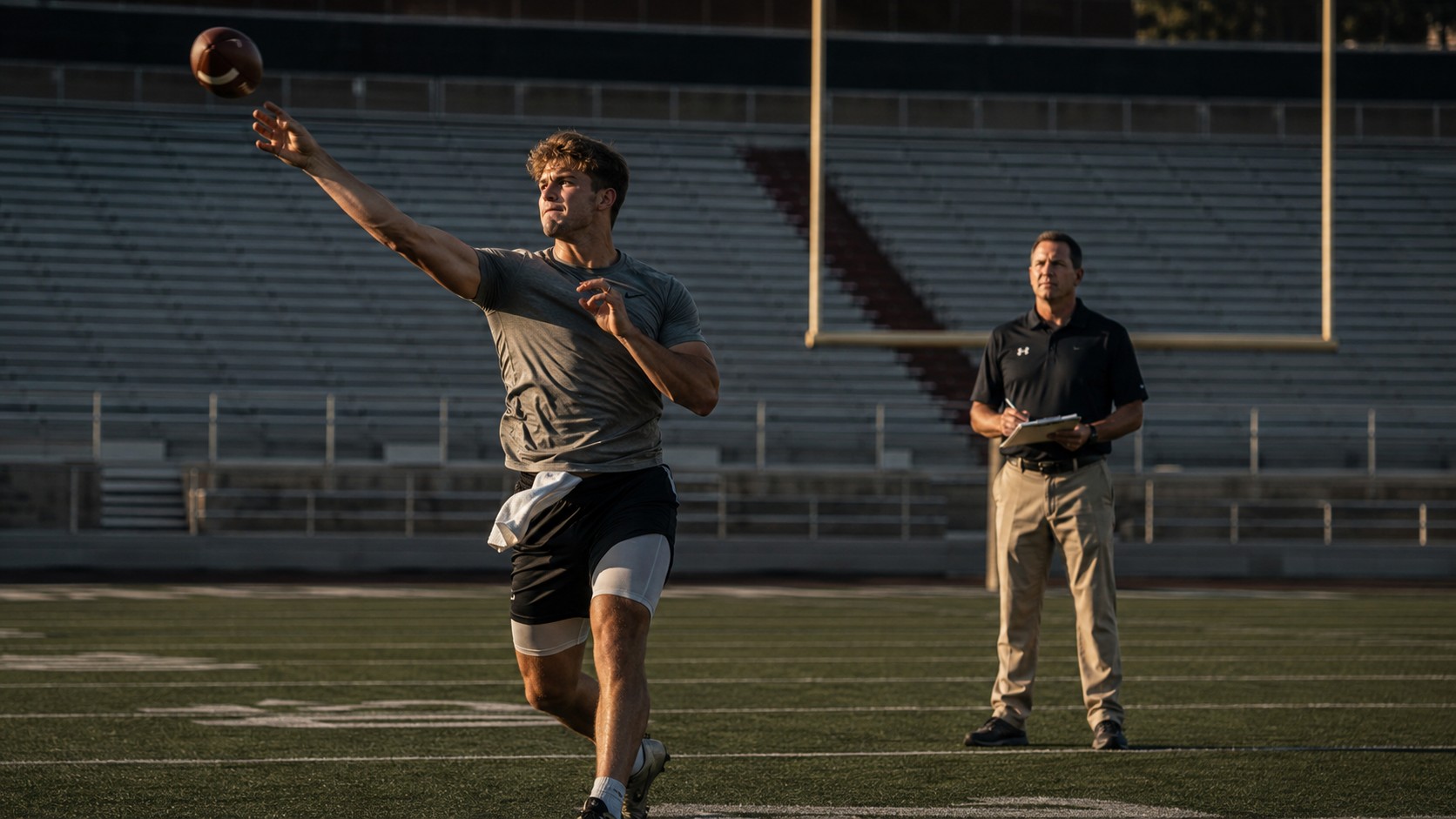
The fall evaluation window is when programs send coaches to watch high school games in person. Under the proposed model, each school would have a total of 50 evaluation days across the entire fall period, shared among up to 17 staff members.
That number is not small, but it is finite. A program cannot cover every game in every state for every position group. Choices have to be made. Staff members have to be assigned strategically.
For families, that shift carries a specific implication: when a college coach shows up at a high school game under this model, it is a deliberate allocation of a limited resource. Not a casual stop. Not routine relationship maintenance. A real choice about where to spend a capped day.
What this means for families evaluating programs
The evaluation visit has always been considered a meaningful signal of interest. Under a day-allotment model, that signal becomes more consistent.
A program that sends a position coach to watch your athlete twice in one fall is spending from a budget. A program that appears once early and does not return is not necessarily losing interest. But the absence of follow-up visits, combined with other signals, becomes more readable in context.
Families in the 2028 class will be the first fully recruited class to experience this model from the start of their cycle. If the recommendation is approved in August 2026 as anticipated, coaches will enter the 2027 fall evaluation window, the first major in-person evaluation season for 2028 recruits, already operating under a capped framework.
Programs will prioritize more deliberately. Families should read that prioritization accordingly.
The practical question for families building a target list
For 2028 families, the evaluation day allotment shifts what it means to receive in-person attention. It is worth tracking not just whether a program visits, but how often, and how far they traveled to do it.
Under a capped model, distance is not the explanation it used to be. A program that drives several hours to attend a game in October is making a statement about their board. A program that relies entirely on film after a single early visit may be communicating something different.
That distinction matters more starting in 2027 than it did before.