

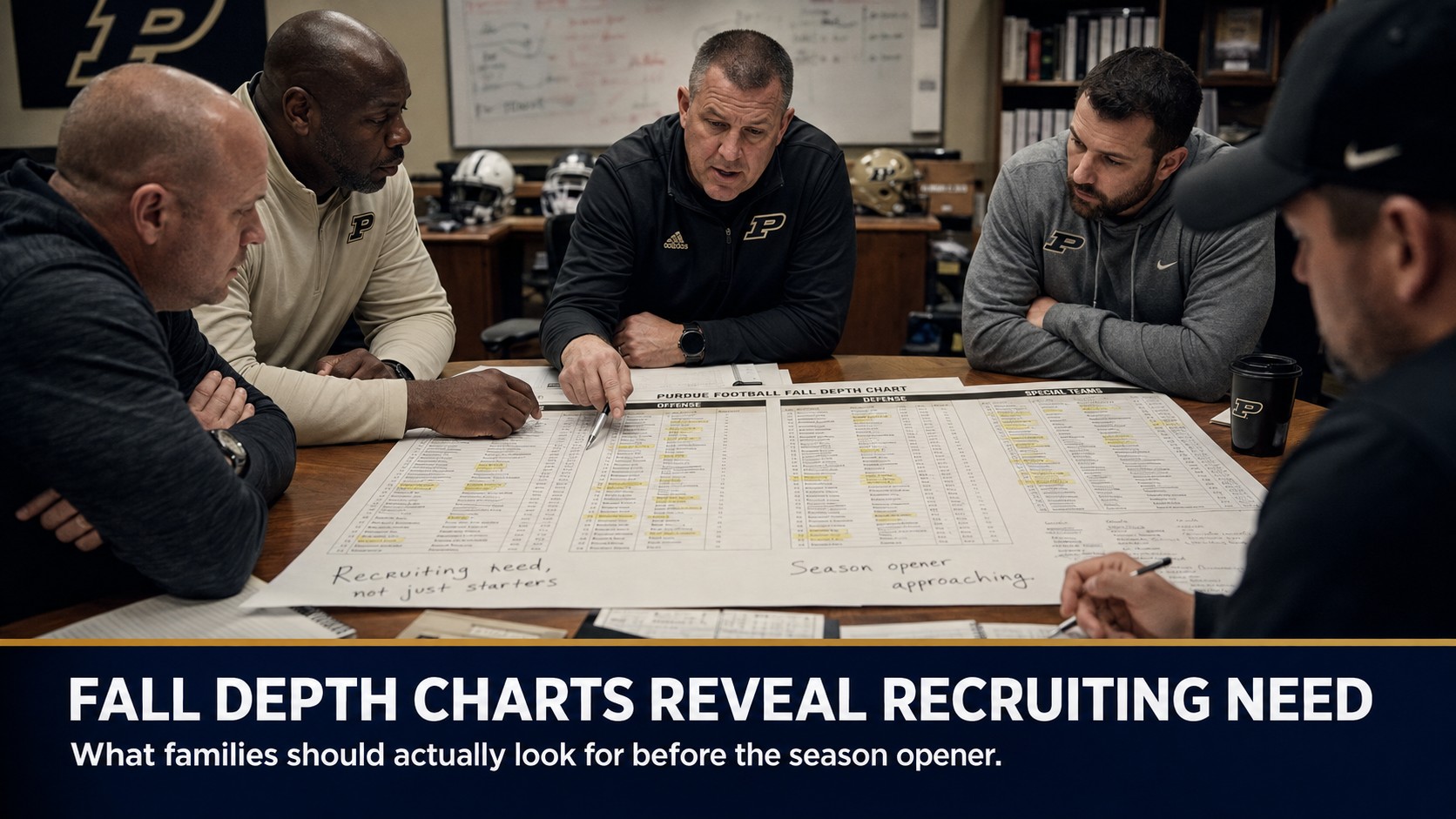
The chart comes out for a reason
Every FBS program releases a formal depth chart before its season opener, typically in the final week of fall camp. Most families who look at it want to know who starts. That is the wrong question.
What the chart actually shows, when read carefully, is which positions are thin, which roster spots may not survive a transfer or graduation, and where a program is likely to recruit in the next cycle. For families with an athlete in the 2027 class, this is actionable information.
What to look for instead of who starts
The most useful part of a depth chart is not the top line. It is the depth behind the starter and the class composition of the entire position group.
A position group with multiple seniors at the top means the program will need to fill that room over the next 12 months. A group anchored by freshmen and sophomores, with no clear backup behind the returner, suggests the program is actively looking for competition.
Three things to look for at your athlete's position:
- Class year of the top two players. Seniors and juniors mean near-term rotation turnover. Freshmen and sophomores mean the existing starter is likely to stay for multiple seasons.
- How many scholarship players are in the room. FBS programs are capped at 85 scholarships and 105 total players. A position group with six scholarship players has less available room than one with three.
- How that group was built. If most of the top contributors at a position transferred in, that tells you how the program sources talent there. Programs with a history of portal-heavy position groups may continue that pattern over younger high school recruits.
The portal history the chart does not show
Published depth charts do not indicate where players came from, but that information is available. Transfer portal records on sites like 247Sports and On3 show which players entered the portal from a given school, when they transferred, and where they landed.
A family evaluating an offer from a program that has rebuilt a position group through the portal twice in three years is evaluating a different kind of opportunity than one from a program that has developed players from high school through their senior seasons.
Neither pattern is inherently negative. But knowing which kind of program is offering changes how you read every conversation that follows.
What this means for families right now
Fall depth charts are published before the opener and will shift throughout the season as injuries and rotations develop. The version released now is a snapshot, not a guarantee.
For families actively evaluating offers, this week is a practical moment to cross-reference what a coaching staff has described against what the depth chart actually shows. If a coach describes urgent need at your athlete's position and the chart supports it, that is alignment. If the chart shows a full room with multiple underclassmen ahead of where your athlete would arrive, that is information worth having before the next conversation.
Understanding a depth chart is not a recruiting strategy in itself. It is context. Context makes conversations with coaches clearer, and clarity is the foundation of every good recruiting decision.