

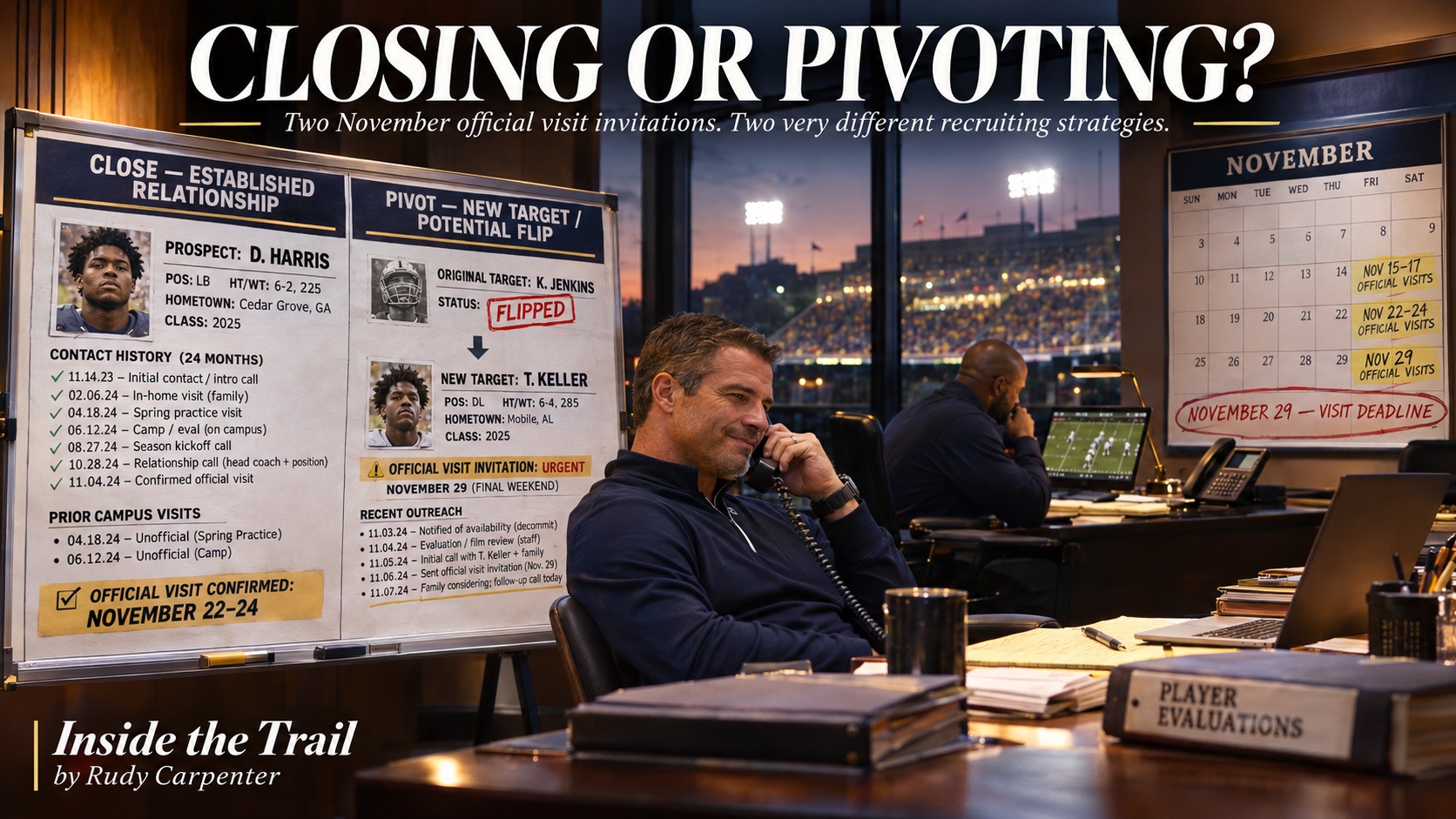
I talked to a position coach last week. He was putting together his November visit schedule and had just watched his top target at the position flip to a conference rival. He had two OV weekends remaining, three names on his board, and a list of phone calls to start making. He said: "I know who I want. I just need to figure out who I can still get."
Three weekends left, and staffs are calling everyone
That is an honest summary of where most Power 4 staffs find themselves right now. By early November, programs have a clear picture of where they stand at every position on the board. Some of those pictures have not changed in months. Others have shifted considerably since summer, and staffs are recalibrating with the official visit window closing on November 29.
With three weekends left, virtually every serious program is running one of two plays. The first is closing: bringing in a recruit they have been building toward for 18 months, showing them one final time why the program is right, and getting them to sign in December. The second is pivoting: using November official visits to target committed-elsewhere recruits after the board has changed.
Both visits look almost identical to the recruit receiving the invitation. They are not identical.
What a close looks like from inside the program
A closing visit is designed around a specific person. The staff has studied this kid for a year or more. They know what the family values and what questions are still unresolved. The position coach has been the consistent relationship, and he built it before most other programs were paying attention.
The visit is tight and purposeful. The right staff members are in the right conversations. When the head coach sits down with the family, it does not feel like a standard pitch. It feels like a continuation. They already know each other. The program is showing the recruit what the next four years actually look like for him, not what the program looks like in general.
What a pivot looks like from the same seat
A pivot visit starts from scratch. The outreach came in recently, often in October of senior year, with little or no prior relationship. The staff has 48 hours to cover ground that the original school spent 18 months building.
They show everything. Full tour. Every facility. Every coach. The pitch is comprehensive because it has to be. The position coach is working to establish rapport in a weekend that the previous staff earned through two years of contact.
None of this means the program is the wrong fit. Some staffs execute this well. Ohio State has closed multiple flips in the final OV weekends of this cycle. LSU has been targeting committed-elsewhere recruits with back-to-back November official visit weekends, and Texas has an official visit scheduled before the dead period for a prospect committed to another program. When these flips work, it is often because the original commitment was not as settled as it appeared from the outside.
But the families at the programs losing those recruits often realize, in hindsight, that the relationship was more fragile than they understood it to be.
The question worth asking before you take the visit
The issue is not whether to accept a November official visit invitation from a program that reached out recently. Sometimes that is exactly the right call.
The issue is knowing what kind of visit you are on.
If a position coach has been a consistent presence since junior year, the program is running the closing play. You have context. Use it to evaluate whether you want to be closed.
If the outreach came in October with no prior contact history, ask yourself what changed on their board. A program calling in November after going quiet all spring and summer is responding to a gap, not building toward a vision. That does not make the program wrong. It means you owe it to yourself to understand the difference before you make a decision.
Can you trace the arc of how this relationship actually developed?