

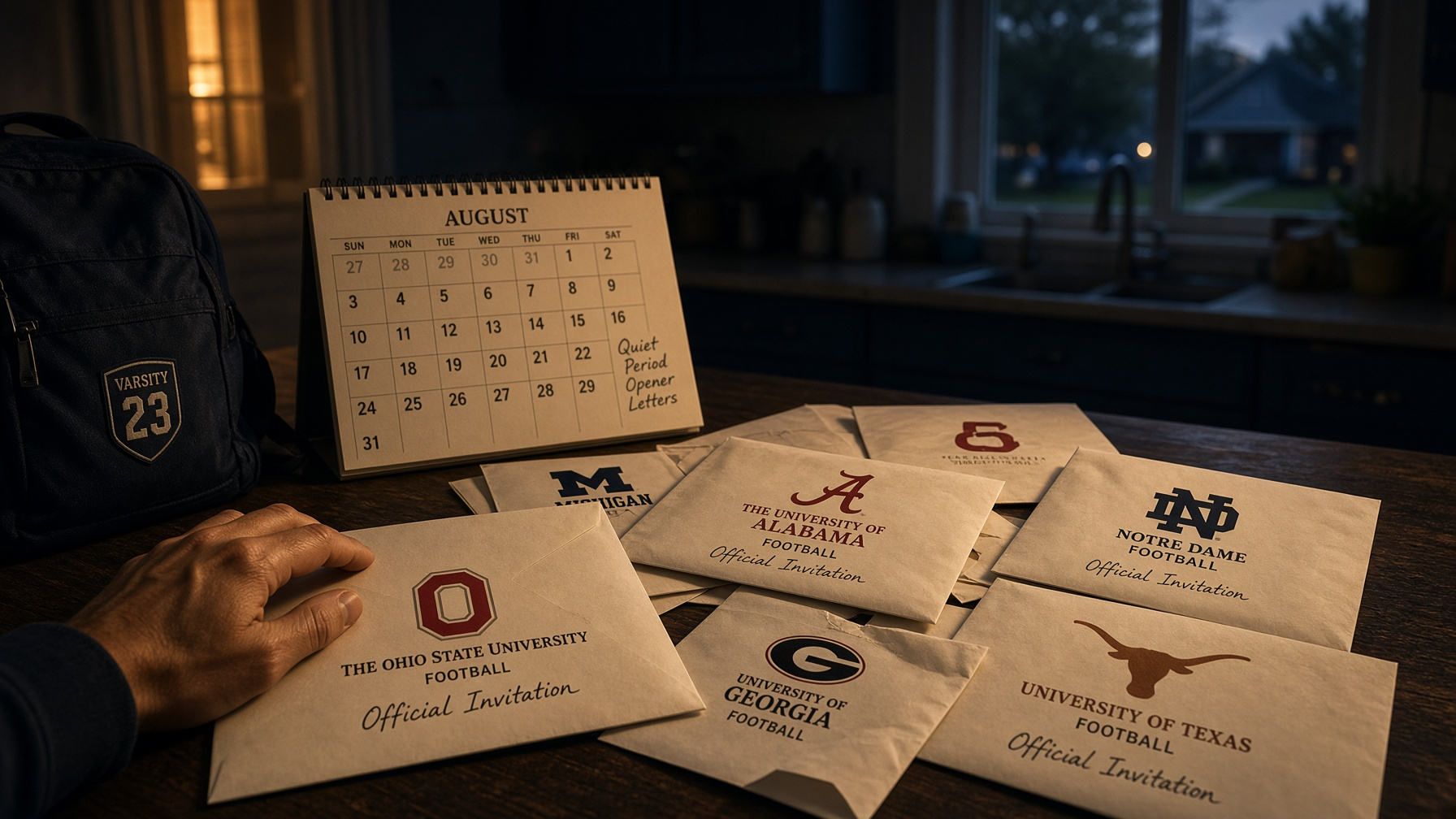
The dead period does not apply on opener weekends
The NCAA's August dead period prohibits all in-person contact between college coaches and recruits from August 1 through August 31. But there is a carve-out most families do not know about.
For 48 hours before a home game in August, and for 48 hours after it, the dead period converts to a quiet period. Coaches can meet with recruits on campus. They cannot travel to watch athletes compete, visit high schools, or contact families off campus, but if a recruit is on campus for the game, the coaching staff can speak with them.
With the FBS regular season starting August 29, several programs are hosting home games next weekend. For those schools, the first on-campus windows of the fall cycle open as early as August 27.
What the invitation signals
When a program invites your athlete to attend an opener, that decision is deliberate. Programs in full dead-period mode cannot circulate casual invitations. Choosing to extend one to your family means someone on that staff made a specific judgment call about your athlete.
That is meaningful. It is not an offer. It is not a commitment. But it is a signal that the program is holding space for your athlete before the fall evaluation period opens in September.
The signal gets stronger if a position coach or coordinator makes time during a game-week preparation schedule to speak with your family. Coaches do not have extra hours during opener week. When they carve some out, that is information.
What the quiet period does not allow
Families sometimes misread a game-day visit as a full contact period because the atmosphere feels open. It is not.
During a quiet period, coaches can speak with recruits on campus, but only on campus. They cannot travel off campus, cannot visit your athlete's school, and cannot initiate contact in ways not otherwise permitted under a quiet period. The window is campus-only, time-limited, and surrounded by all the demands of a game week.
This is not the moment to press for an offer or treat the conversation as a negotiation. It is a low-pressure observation opportunity, useful for both sides.
What families should focus on
The opener visit is more useful as intelligence than as a decision point.
Walk the campus. Observe how players interact before a game. Notice which staff members make time for your family and which do not. Ask a specific question about how the program develops athletes at your son's position, and listen for whether the answer is substantive or rehearsed.
What you are evaluating is not only whether your athlete fits this program. You are evaluating whether this program will invest in him after signing day. The quieter version of that question, visible in how a staff treats a recruit during the busiest week of their year, often tells you more than a full official visit with presentations and tours.