

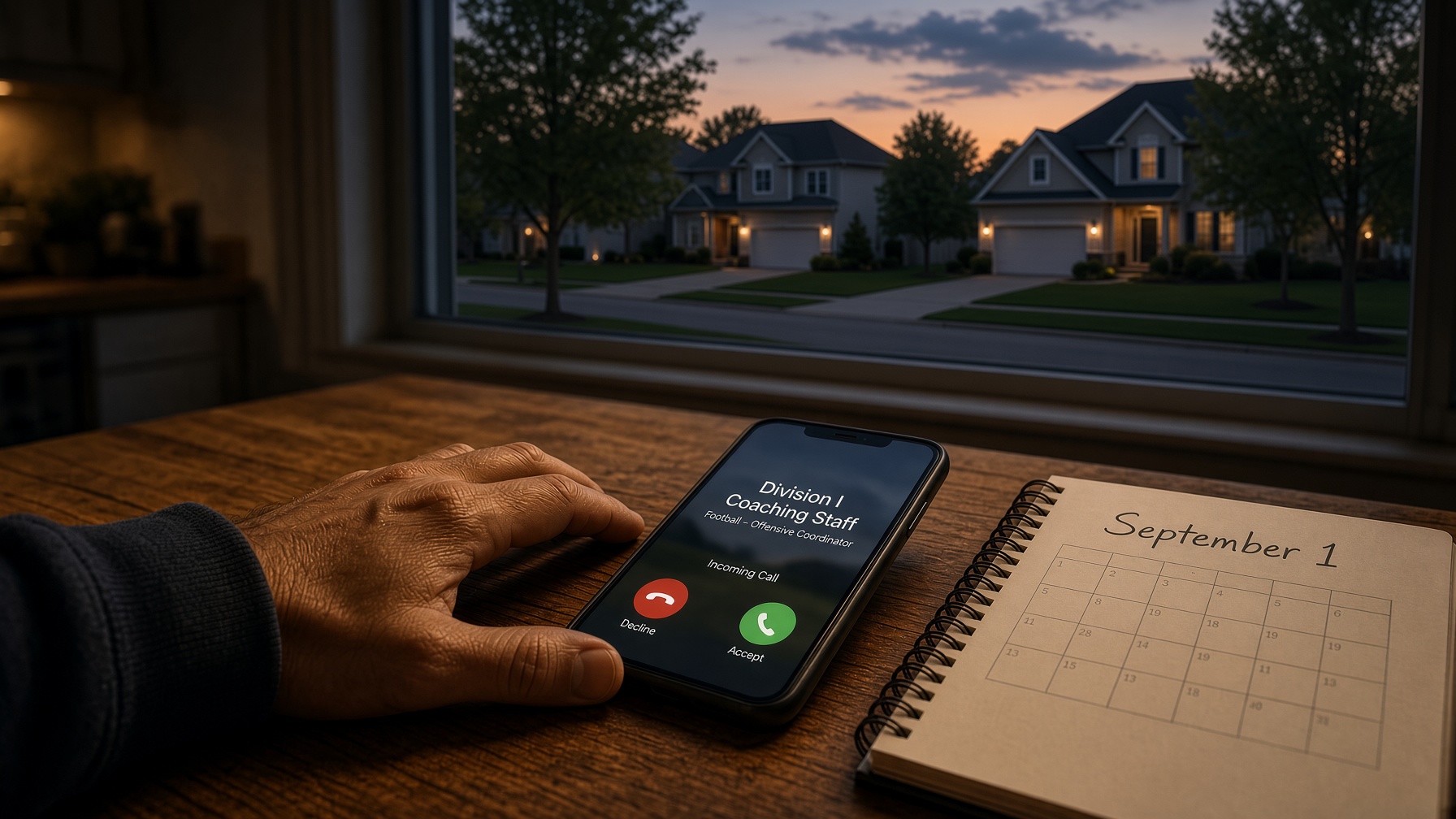
Division I coaches can call 2028 recruits directly starting September 1. For families who have spent the summer building film packages and sending coach emails, that date marks the first time a two-way conversation can actually begin.
What happens next, and how families interpret it, shapes the rest of junior year.
A call is not an offer
The most important thing a family can understand about a first coach call is what it is not. Coaches opening contact on September 1 are not ready to extend a scholarship. They are beginning a sequence of evaluation that will determine whether an offer comes, and when.
That distinction matters because families can misread early interest. Excitement is reasonable. But treating a first call as near-finished can lead to closing down the outreach process, passing on camps, or pulling back from other programs before a genuine picture has formed.
A September 1 call signals that a program is paying attention. It does not settle where the athlete stands on the board.
Who calls tells you something
Not every September 1 call carries the same weight.
A position coach calling is standard procedure. A coordinator calling suggests higher board placement. A head coach calling in the first two weeks of September is meaningful in a way the others are not.
Most early calls will come from position coaches. That is expected, and it does not indicate anything negative. What matters more over time is the pattern. Consistent contact, follow-up questions about film and grades, and an invitation to visit each build toward a clearer picture than any single call can provide.
If a position coach calls once in early September and goes quiet for six weeks, that is information too.
What to say when the call comes
Be engaged. Ask questions. Do not commit to anything.
First calls are short. Programs are introducing themselves, gauging the family's interest level, and learning which other programs have been in contact. Coaches want to understand the competitive landscape around the athlete.
Families can ask: What have you seen from his film so far? What position would you project for your program? Are there specific things you want to evaluate this fall? These are reasonable questions that show a family is thoughtful without being pushy.
What to avoid: drawing conclusions about how serious the program is from a single conversation. September calls are an opening, not an outcome.
What comes after
A first call typically opens a follow-up sequence.
The athlete should make sure updated film is available within a week or two of each call. A brief follow-up email from the family confirming interest and linking updated film is appropriate and useful.
From there, the fall evaluation window is where programs make more concrete decisions. Coaches attending high school games during October and November, continued phone contact, and eventually an unofficial visit invitation tell the family more about where things genuinely stand than any September call could.
Families that finish junior year in the strongest position tend to have treated the first call as one data point in a longer process, not as validation that the process is essentially over.