

Evaluation days and contact days are not the same
Most families notice when a college coach shows up at their athlete's game. What they don't always track is which type of visit it is and why that distinction carries real advisory weight.
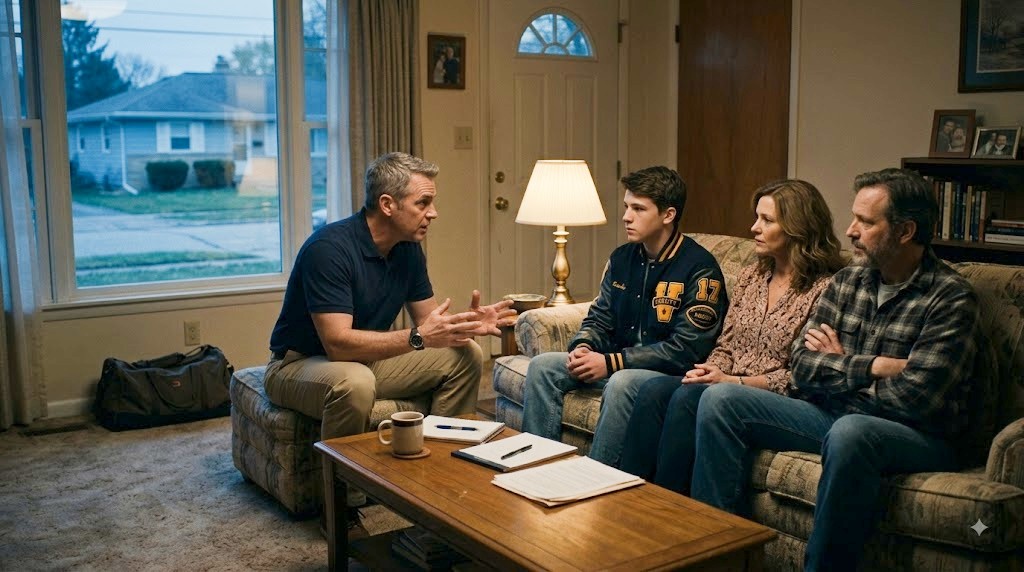
Under NCAA rules, off-campus coach contact falls into two separate categories. During an evaluation period, a coach can observe your athlete compete or attend their school but cannot approach the family for a face-to-face conversation off campus. During a contact period, a coach can have an in-person conversation with the athlete and parents at your home, at your school, or elsewhere away from any college campus.
A coach watching your athlete play in October is operating under evaluation-period rules. A coach sitting in your living room in January is operating under contact-period rules. The rules governing each are different. The signals they send are different, too.
A budget makes every contact day deliberate
Starting January 1, 2027, FBS programs will operate under a new off-campus recruiting model. The NCAA's FBS Oversight Committee recommended, and received expedited review clearance for, a structure that gives each program a pool of 300 off-campus recruiting person days to use during winter and spring contact periods. Up to 17 coaches per program (the head coach plus 16 assistants) are permitted to recruit off campus under the new model.
Three hundred days sounds generous. Spread across a staff of 17 recruiters managing active conversations with 25 to 35 prospective athletes, each requiring follow-up trips, home visits, and school appearances across multiple recruiting cycles, those days are a finite resource. Every coach traveling to a recruit's home consumes a portion of the program's annual budget. That day cannot be redirected once it is used.
The practical effect is that contact-period home visits, already a meaningful signal of program interest, become a more deliberate investment under the new model. Programs are not going to exhaust contact days on athletes who are not serious priorities on their board.
What this means for families in the 2027 cycle
The new model takes effect January 1, 2027, which aligns directly with the winter contact period for 2027 recruits. For families in active conversations this fall, the January window will be the first contact period governed by the new rules.
Two things are worth understanding before that window opens.
First, the type of visit matters. A coach who attended your athlete's October game was likely there under evaluation-period rules, observing but not engaging in off-campus conversation. A coach who schedules a January visit to your home is operating under contact-period rules, investing a budgeted day, and at a different stage of their program's interest.
Second, the budget creates a natural filter. Programs that have tracked your athlete throughout the fall will be deciding in January how to allocate their contact days. Who receives a home visit and who receives a phone call reflects where the program has placed your athlete on its board. Families do not need to over-interpret any single data point. But a coach choosing to invest a contact day with your family is a different category of engagement than one who has not.
The athlete's performance and fit still drive the process. But understanding what each type of coach contact represents, and how program resource decisions shape that contact, helps families read the recruiting process with more clarity and less anxiety.