

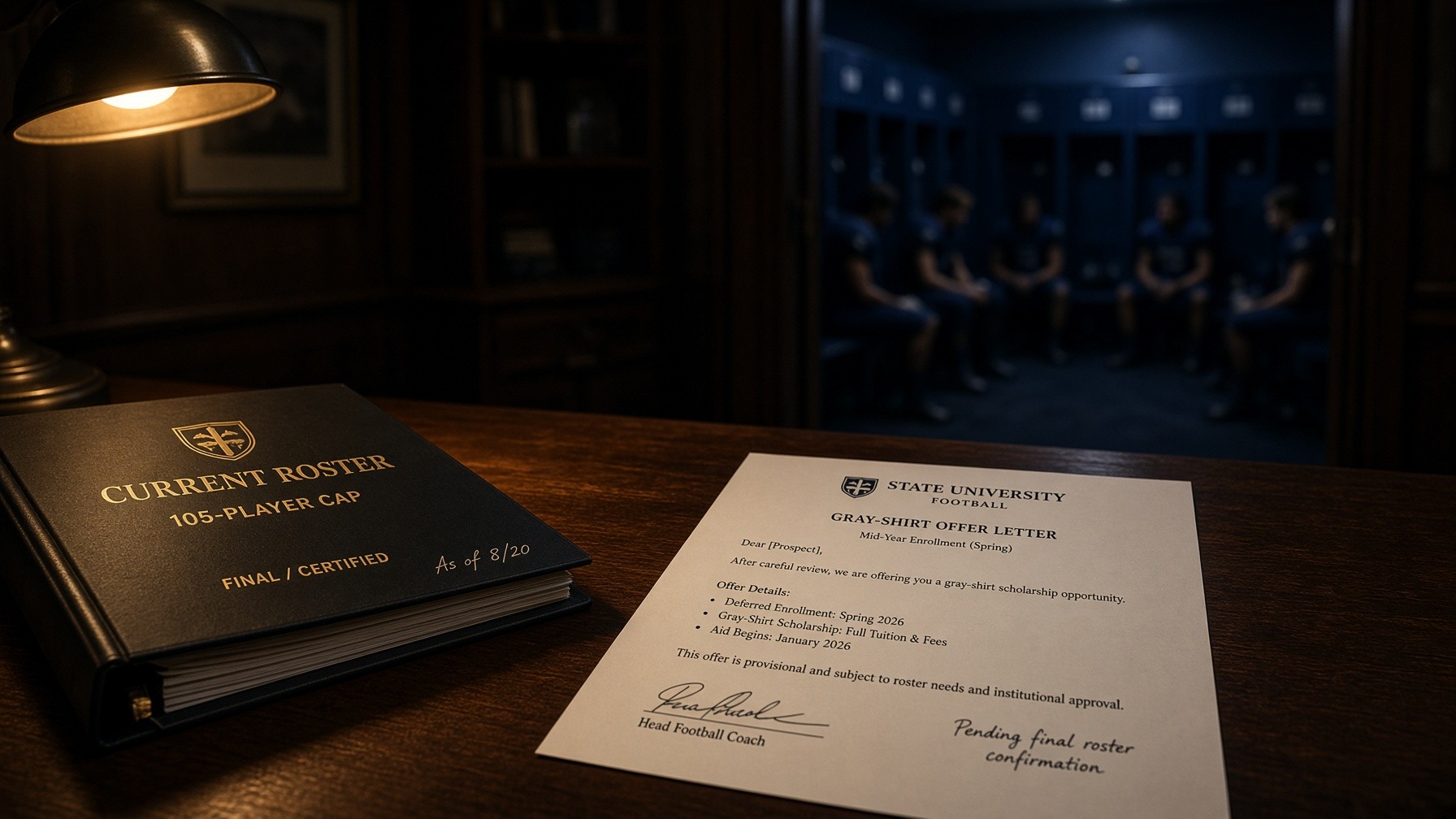
With the 2026 college football season opening this weekend, programs across the country are closing their August roster counts. Under the 105-player cap, every spot is filled by a scholarship athlete. Programs at capacity cannot bring in a new player until January — and that constraint is producing more gray-shirt offers than families have historically seen.
If your uncommitted senior has received a gray-shirt offer this fall, understanding the structure before responding is worth the time.
What a gray-shirt is
A gray-shirt is a deferred enrollment arrangement. The athlete does not report to campus in August. Instead, he sits out the fall semester and enrolls full-time in January, at which point the scholarship begins and the NCAA eligibility clock starts.
During the fall gap, the athlete has no scholarship, no team access, and no official university affiliation. The program cannot provide practice time, film review, or formal coaching. The fall semester is the family's financial responsibility — either through enrollment elsewhere, independent study, or simply not attending school until January.
The mechanics differ from a red-shirt, where the athlete is enrolled, practicing, and covered by a scholarship while preserving a year of competition eligibility. In a gray-shirt arrangement, the athlete is not yet enrolled at all.
What is and is not binding
The program's commitment in a gray-shirt arrangement is verbal. There is no signed agreement until the athlete enrolls in January and signs the financial aid document. That distinction matters.
If a coaching staff changes during the fall, if a current roster player at that position retires medically and the January scholarship need disappears, or if the program's class composition shifts, the verbal commitment underpinning the gray-shirt offer can change. This is not specific to any program — it is the structure of the arrangement itself.
Families should get answers, in writing where possible, to two questions before accepting: what specific scholarship amount is being offered, and under what conditions it could change before January.
How to evaluate a gray-shirt offer
A gray-shirt offer from a program that genuinely fits the athlete can be the right path. The eligibility benefit is real: the five-year clock does not start until January enrollment, preserving four full years of competition eligibility from that point. Programs that want an athlete will sometimes extend a gray-shirt because they have no August roster room, not because he is a secondary target.
But the gray-shirt offer should always be compared against what else is available. A full scholarship with August enrollment from a comparable program represents more certainty. A family weighing those two paths is making a fit-and-risk decision, not simply comparing offers.
A quiet fall recruiting period can make a gray-shirt feel more appealing than the situation warrants. The right framework stays the same: what does this program actually offer, what does the fall gap cost the family, and is the verbal agreement from this specific staff reliable enough to act on.