

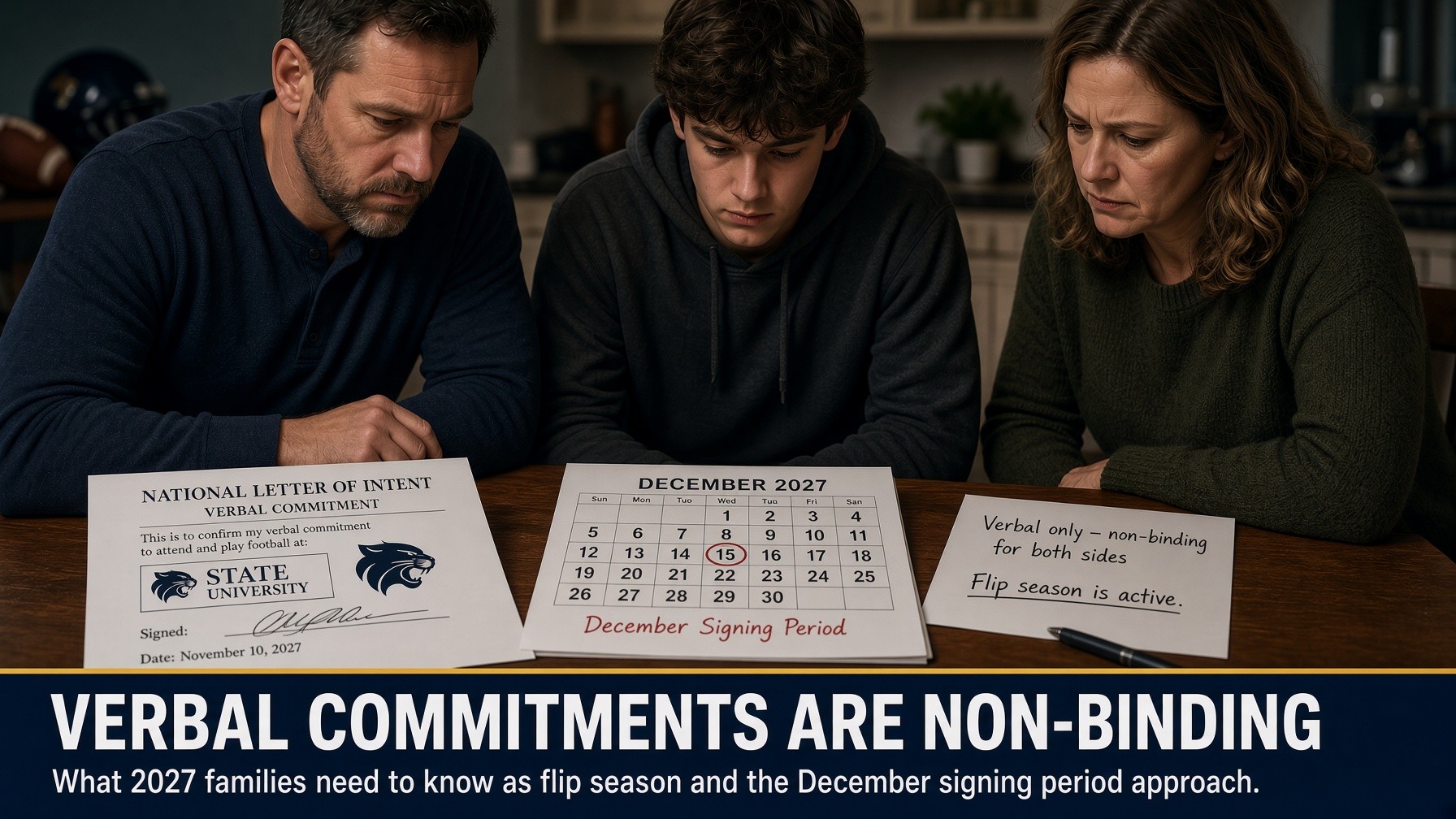
The commitment is not the signature
In college football recruiting, a verbal commitment is exactly that: verbal. It is a public declaration of intent, not a signed agreement. It creates no legal obligation for the athlete, and it creates no legal obligation for the program.
That distinction matters more during the fall than at any other point in the cycle. The early signing period for the 2027 class opens December 2, 2026. Until that date, any commitment, no matter how publicly announced or how long ago it was made, can be changed by either side without penalty.
What programs can do after a commitment
A verbal commitment does not stop a program from continuing to recruit other athletes at the same position. Coaches legally may, and routinely do, pursue prospects across their entire position board after receiving a verbal pledge. If a higher-priority athlete becomes available through a decommitment, a coaching change elsewhere, or a new evaluation, the program can extend an offer without violating any NCAA rule.
Coaching changes intensify this dynamic. The 2027 class has already produced multiple high-profile decommitments tied directly to staff departures. When the position coach or coordinator who recruited an athlete leaves a program, the relationship that created the commitment often leaves with him. The programs that understand this recruit aggressively through the fall, targeting verbally committed athletes at other schools. This is a normal and legal part of how rosters get built.
What committed families should focus on through the fall
A verbal commitment is the start of an ongoing relationship with a program, not the end of recruiting. Families in this phase benefit from a few clear practices.
- Staying in regular contact with the position coach and coordinator who recruited the athlete. The relationship should be maintained through the fall, not assumed.
- Watching for staff changes at the committed program. Coordinator departures before signing day are one of the most common triggers for decommitments.
- Keeping other conversations appropriately current. A verbal commitment is not a binding agreement, and families are not obligated to close off all other relationships before December.
- Understanding what the signature actually means. When an athlete signs a financial aid agreement during the early signing period, the commitment becomes legally binding. Until that date, both the athlete and the program retain full flexibility.
What signing during the early period means
The early signing period (December 2-4, 2026) now accounts for a large majority of FBS commitments each cycle. Signing during this window allows an athlete to enroll in January, which matters for families who want their athlete to participate in spring practice and get an early start in the program.
Waiting until the February signing date offers more flexibility but delays enrollment timing. Both are legitimate paths. The choice should reflect the family's confidence in the program and the stability of the situation, not urgency or pressure from either side.
For any family with a verbal commitment heading into fall: stay connected with the program, track what you are observing, and make sure the commitment still reflects what your family and your athlete want. The signature comes later. The relationship is what needs attention now.