

What happened
An Indiana state court granted a preliminary injunction September 25 allowing 97 college athletes to compete in the 2026-27 season. All are four-for-four graduates from the high school class of 2022: athletes who enrolled in college that fall and played all four seasons without a COVID-era waiver. Under normal eligibility rules, they would be finished. The court said otherwise.
Monroe County Circuit Judge Kara E. Krothe found that "under the plain terms of the 2026-27 NCAA Manual, they are eligible to compete, and the NCAA is breaching its contractual obligations by denying them that opportunity." The NCAA filed an emergency appeal the following morning. The appellate court found the motion procedurally insufficient, and the athletes remain eligible to compete while the case continues.
What it means for programs
Roster composition at FBS programs is now subject to a variable most athletic departments did not fully plan for. When the class of 2022 enrolled, the path was predictable: four seasons, then out. Courts are now writing different conclusions to those careers, one case at a time.
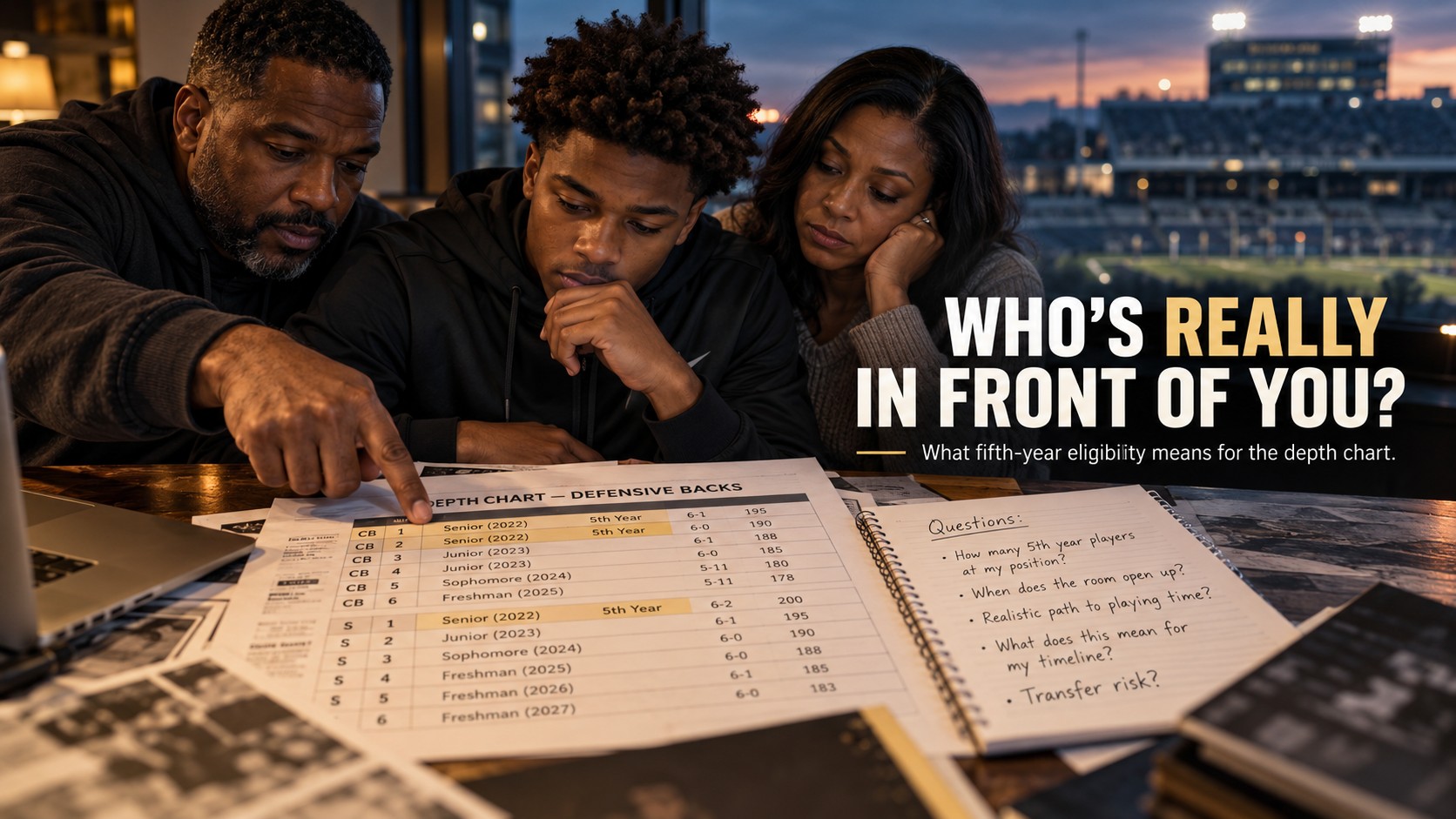
The Daley case is not isolated. A second challenge, Gayle v. NCAA, produced a similar bench ruling in the same period. More cases involving the same class are active in other jurisdictions. Each successful preliminary injunction returns a veteran player to a depth chart that had already been reshaped around that athlete's departure.
What families should ask
For families evaluating programs this fall, playing time has always required careful scrutiny. The eligibility litigation adds another dimension. These questions are worth raising directly:
- Is anyone at the athlete's position currently involved in an eligibility challenge, or retaining eligibility the program did not originally plan around?
- How does the program define available opportunity: against the roster as it stands today, or against attrition that has not yet been confirmed?
- If the depth chart shifts materially before signing day, how does the program communicate that change, and what does it mean for the offer?
The pattern worth watching
Courts are increasingly scrutinizing whether the NCAA's eligibility restrictions hold up to its own bylaws. The legal theory in Daley is specific to this case but the approach is transferable. The core argument is that the NCAA breached its contractual obligations by excluding a class of athletes from rules they could reasonably have expected to benefit from. Similar challenges will follow.
For families with athletes in the 2027 cycle, the practical takeaway is straightforward. Playing time was never guaranteed. What has changed is that the roster a program shows you today may look different before signing day, and not always because of decisions the program controls.