

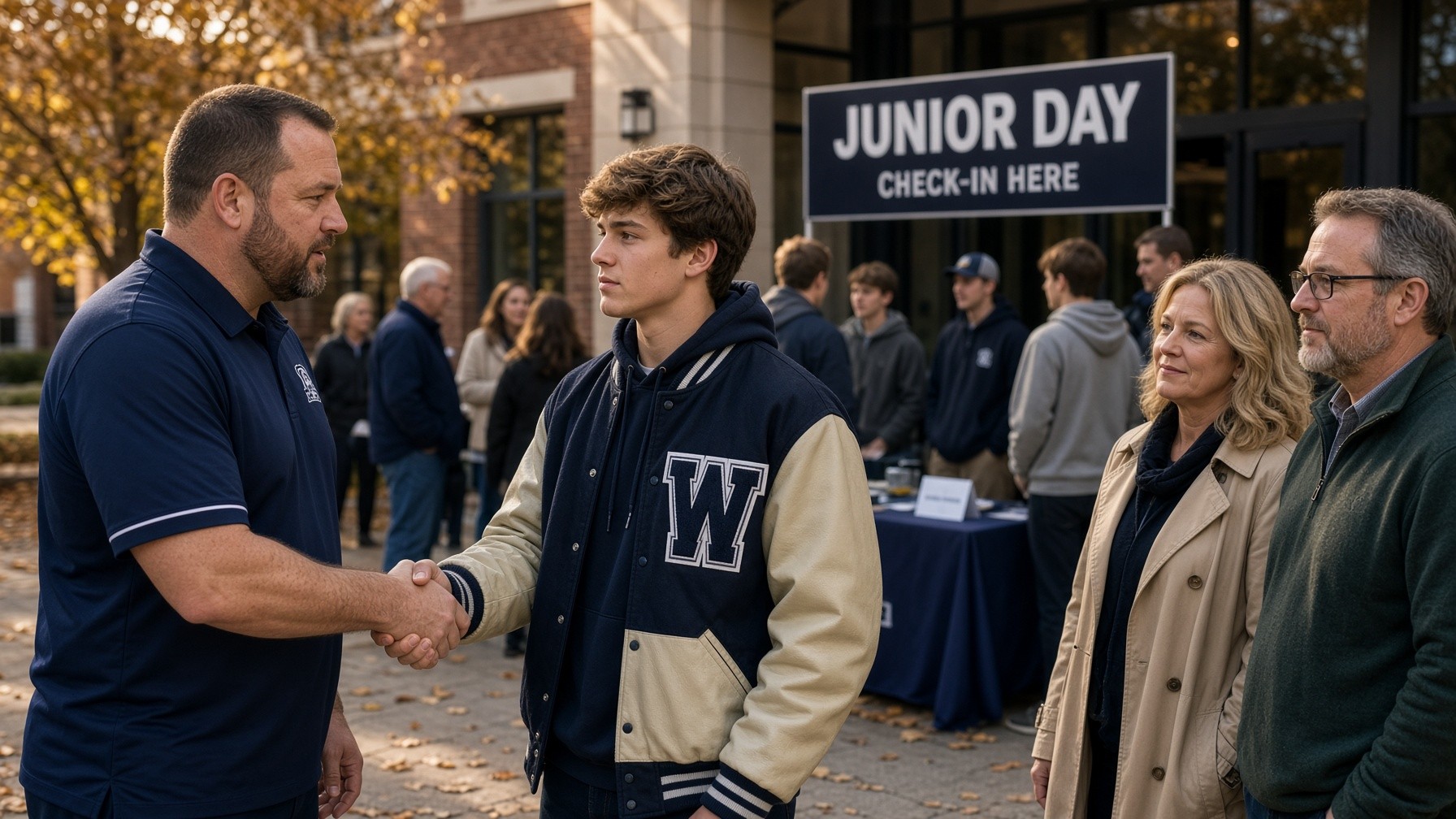
Why programs host junior days in the fall
During the fall evaluation period, college coaches can attend high school games and watch athletes compete. But they cannot approach an athlete or family in person off campus during that window. Contact at the game is not permitted.
When an athlete and family visit campus, the rules shift. On-campus contact is permitted during an unofficial visit. Coaches can have direct, extended conversations with a recruit who comes through the door. That is why fall junior days exist. They are one of the few opportunities in the fall calendar where a program can sit across from a recruit and talk, during a period when off-campus conversations are off-limits.
Programs know this. The fall junior day schedule is not casual programming.
Not every invitation carries the same weight
Junior day invitations are not uniform. Some programs invite large groups of prospects across many positions as a broad visibility exercise. Others run smaller, more targeted events organized around a specific position group, with a personal call from the position coach and a clear reason for the invitation.
The distinction matters. A mass invitation reflects nominal interest. A targeted one, especially one that includes a direct call from a coach, a reference to specific film, or a guest list built around your athlete's exact position, is a more deliberate use of limited staff time.
Families can ask, directly and politely, how many athletes are expected and what positions are represented. The answer tells you something real about the level of interest behind the invitation.
What to observe when you arrive
Who greets you on arrival is worth noting. A position coach or coordinator who spends individualized time with your athlete is a different signal than a staff member whose role you do not recognize. Programs that are seriously evaluating your athlete will have prepared. They know the film, they reference specific moments from it, and they have a clear sense of where your athlete fits in their board priorities.
Programming that is entirely group-based (a facility tour, a team presentation, a brief meet-and-greet) is not a negative signal on its own. But families should not read a well-organized campus tour as evidence that the program is actively recruiting your athlete. They are related but not the same thing.
What this means right now
Fall camp runs through late August. Most programs will not finalize junior day dates until early September, once the season opens and their roster picture is clearer. Invitations for October and November events will arrive in the weeks ahead.
For 2027 families who have already received invitations, the question now is whether those programs have shown consistent, individualized contact. A junior day invitation is one data point. It tells you the program is aware of your athlete and willing to invest campus time. It does not confirm an offer is coming or establish where your athlete ranks on the program's board.
For families who have not received invitations yet, September will bring more clarity. Coaches who watched your athlete during the evaluation period will either follow up with a campus invitation or they will not. That follow-up is the more meaningful signal.