

What happened and why it matters
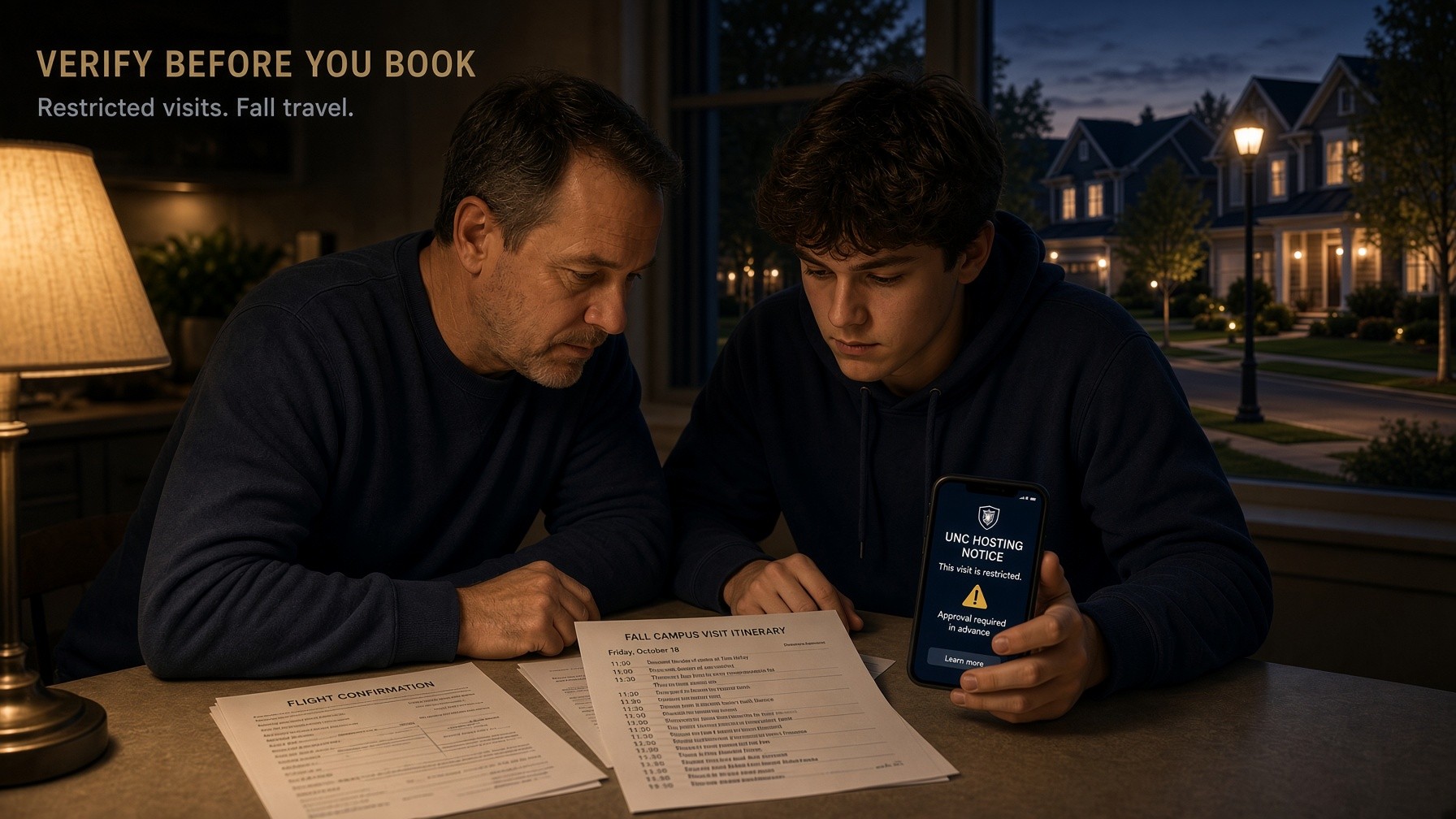
On September 9, North Carolina announced it would not host unofficial visitors for its home opener against East Tennessee State. The restriction stemmed from a self-reported violation from last season involving a staff member suspended for an NCAA rules breach related to extra benefits provided to a recruit. For families who had planned a trip to Chapel Hill, the announcement came with little lead time.
For families tracking any program this fall, it is a reminder that game-day visit schedules are less predictable than they appear.
Self-reporting is standard practice, not a red flag
Programs across the sport self-report violations regularly. The University of Alabama released its annual compliance disclosure this summer, listing six Level III violations (the least severe category) from the 2025-26 year. One involved impermissible contact with a prospect during a restricted recruiting period. No scholarships were affected.
Self-reporting is a sign of a functioning compliance operation. The NCAA imposes lighter consequences on programs that identify and correct their own violations rather than waiting for external investigation. A program with a consistent self-reporting history is generally running a more disciplined compliance department than one that has never surfaced anything.
What families should pay attention to is pattern, not presence. Violations concentrated in the same area (recruiting benefits, impermissible contact, inducements) across multiple seasons are more meaningful than isolated administrative errors. Repetition matters; a single incident usually does not.
Why the unofficial and official visit distinction matters
UNC's restriction applied to unofficial visits, not official ones. An unofficial visit is self-funded: the family covers all travel. The program can host recruits on campus and invite them to games, but provides no financial support. An official visit is university-funded: lodging, meals, and game admissions are covered by the school, and programs have limited official visit capacity in any given season. When compliance penalties restrict hosting, they typically apply to the unofficial category first.
When UNC redirected its remaining official visit capacity to five later home games, that became the new constraint for interested families: limited inventory, deliberate scheduling.
What to verify before booking fall travel
Before committing travel expenses for a home-game unofficial visit, contact the program's compliance office directly and confirm that hosting is permitted for that specific game. One email or call is all it takes, and most families skip it.
If a program cannot host on a specific date, ask about the official visit calendar for remaining home games. How quickly the staff responds, and where in the schedule they place your athlete, carries information about how seriously they are prioritizing the recruitment.
For the 2027 class, with the early signing period opening December 4, the fall calendar is compressed. Every visit window that opens and closes without a confirmed trip carries a cost. Families who navigate this well are the ones treating visit logistics with the same care they bring to evaluating programs.