

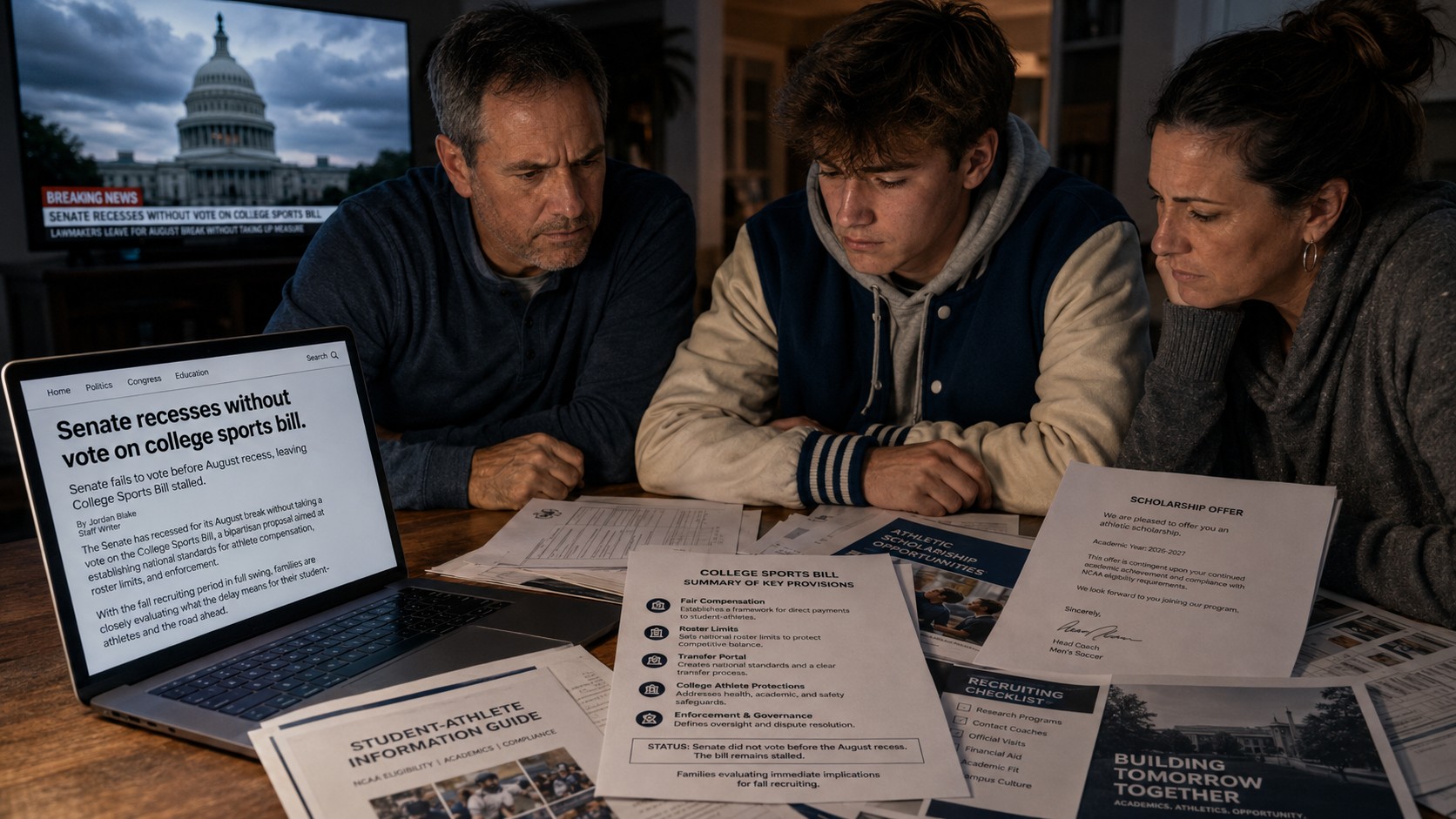
The bill has significant support but no floor vote yet
The Protect College Sports Act passed the Senate Commerce Committee in June with a 19-9 bipartisan vote. The Big Ten and the SEC endorsed the revised text. The White House expressed formal support. Senator Ted Cruz has publicly predicted the bill will pass and be signed into law before the end of the year.
None of that produced a floor vote before the Senate's August recess.
Senate Majority Leader John Thune declined to commit to a floor vote before the recess, citing unresolved questions about scheduling. The bill now waits for full Senate consideration, followed by House action, before it becomes law.
What the bill would do and what it has not yet done
The Protect College Sports Act would establish federal standards for scholarship protections, transfer portal rules, and a revenue-sharing retention pool above the current House settlement cap. Those provisions would carry real weight for families evaluating offers.
They are not yet law.
Programs that reference the bill's provisions during fall recruiting conversations are describing legislation that has not passed the full Senate, has not been considered by the House, and has not been signed by the President. The provisions are real. Their effective date is not.
What to ask when a program references the bill
When a coach describes scholarship security or financial arrangements tied to what the bill would provide, that is a statement about future contingencies, not a present commitment. Worth asking directly:
- What are the current scholarship terms under the rules that exist today?
- What specifically changes if the bill passes, and when would those changes take effect?
- What does the program commit to if this legislation does not pass in this Congress?
Programs operating transparently will answer those questions directly. The answers are more useful than a general reference to pending legislation.
The compressed window after recess
Congress returns from recess after Labor Day. Midterm elections in November will compress the remaining legislative calendar considerably. The bill may still pass this year, and several senators working on it expect that it will.
For families making decisions this fall, the practical point is straightforward. The bill's provisions are worth understanding as context for how the landscape may evolve. They are not a substitute for knowing what a program commits to today, under the rules that currently exist.