

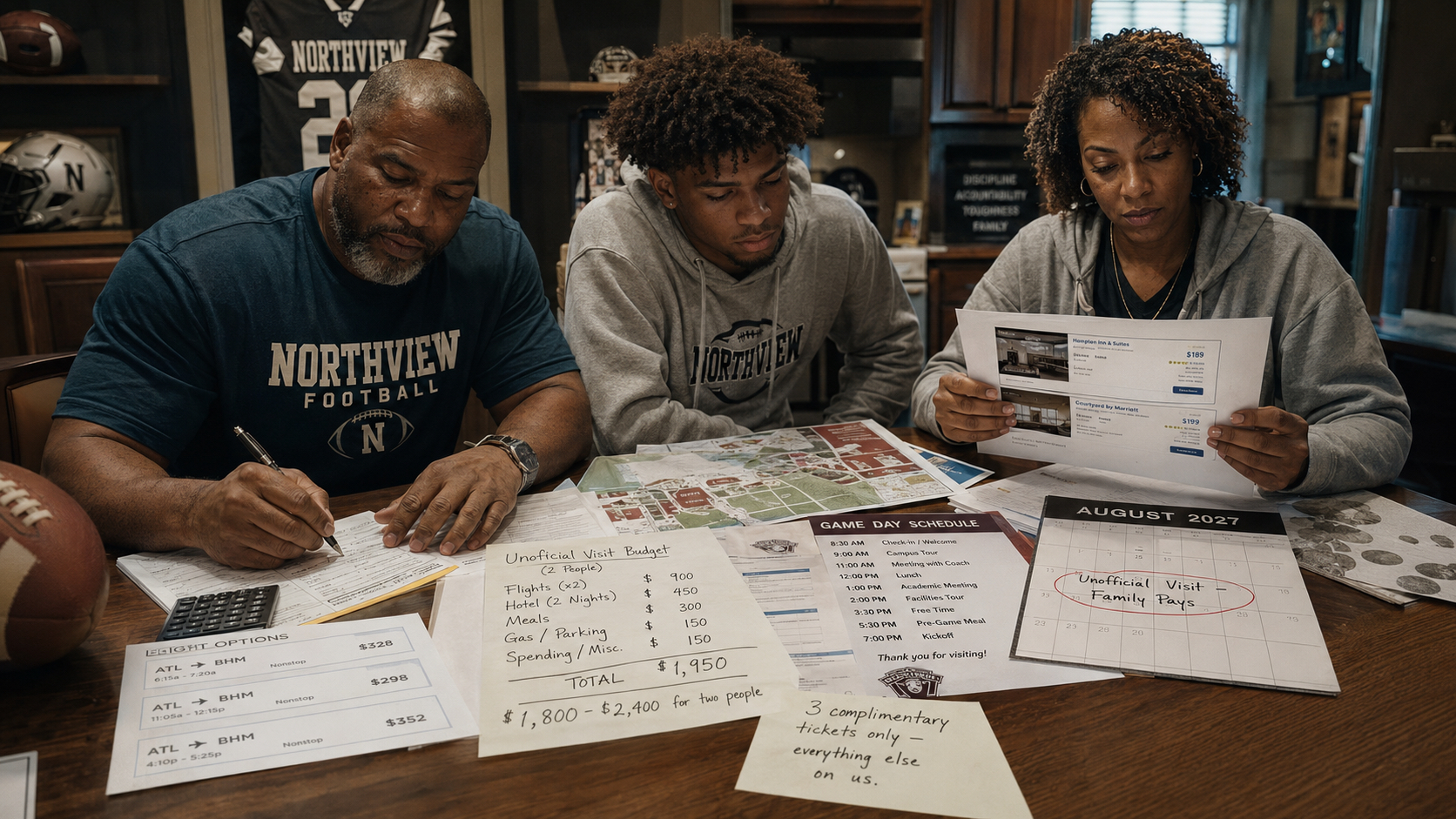
The rule is simple. The reality is not.
Under NCAA rules, an unofficial visit is one the recruit and family arrange and pay for themselves. The school cannot cover transportation, hotels, or meals. The only thing a program can provide is three complimentary tickets to a home athletic event.
That is the rule. The practical question for any family considering a fall game-day visit is what it actually costs, and whether the visit is worth that cost at a particular stage of the recruiting process.
What families typically spend
A round-trip flight for two, one or two nights in a hotel, meals, and ground transportation can run $1,500 to $2,500 or more depending on the school's location and distance traveled. Those costs are real. A family that makes multiple unofficial visits across a fall cycle can spend significantly before a formal offer is ever extended.
It is also worth knowing that the current recruiting environment includes NIL arrangements some programs have used to offset visit costs for recruits. Families should not plan around the availability of those arrangements. Budget for the full trip and treat anything else as secondary.
What an unofficial visit is actually for
At this stage of the 2027 cycle, an unofficial game-day visit serves a different function than an official visit will this fall or winter. It is primarily for the family's benefit, not the program's.
It gives the athlete a chance to experience a campus in game-day conditions: the environment, the atmosphere, the scale of the program. It creates a more informed frame of reference when official visits eventually come and financial conversations begin.
What it does not replace is the official visit, which is fully funded by the school and carries a more formal structure. The five official visits an FBS program can offer are the high-stakes evaluation events. An unofficial visit is research.
Three questions worth working through before booking
Has the program shown enough interest to make the visit meaningful? An unofficial visit is not the same as an invitation. If a program has made minimal contact, showing up for a game does not guarantee meaningful engagement from the coaching staff.
What stage is the relationship in? If a program is offering and asking the athlete to visit, the school has flagged this relationship as a priority. That context makes the cost easier to justify. If contact has been limited, the family is taking a more speculative position.
What does the athlete actually need to learn? Some families visit a campus and find that geography, academic culture, or the overall environment answers the question clearly. That is exactly what an unofficial visit is designed to do.
The bottom line
Fall game-day visits can be valuable, and many families find them decisive. The key is going in with a clear purpose: not because a program extended a casual invitation, but because the family has a specific question it needs answered before official visit season begins.
When travel is expensive and the recruiting calendar is crowded, that distinction matters.