

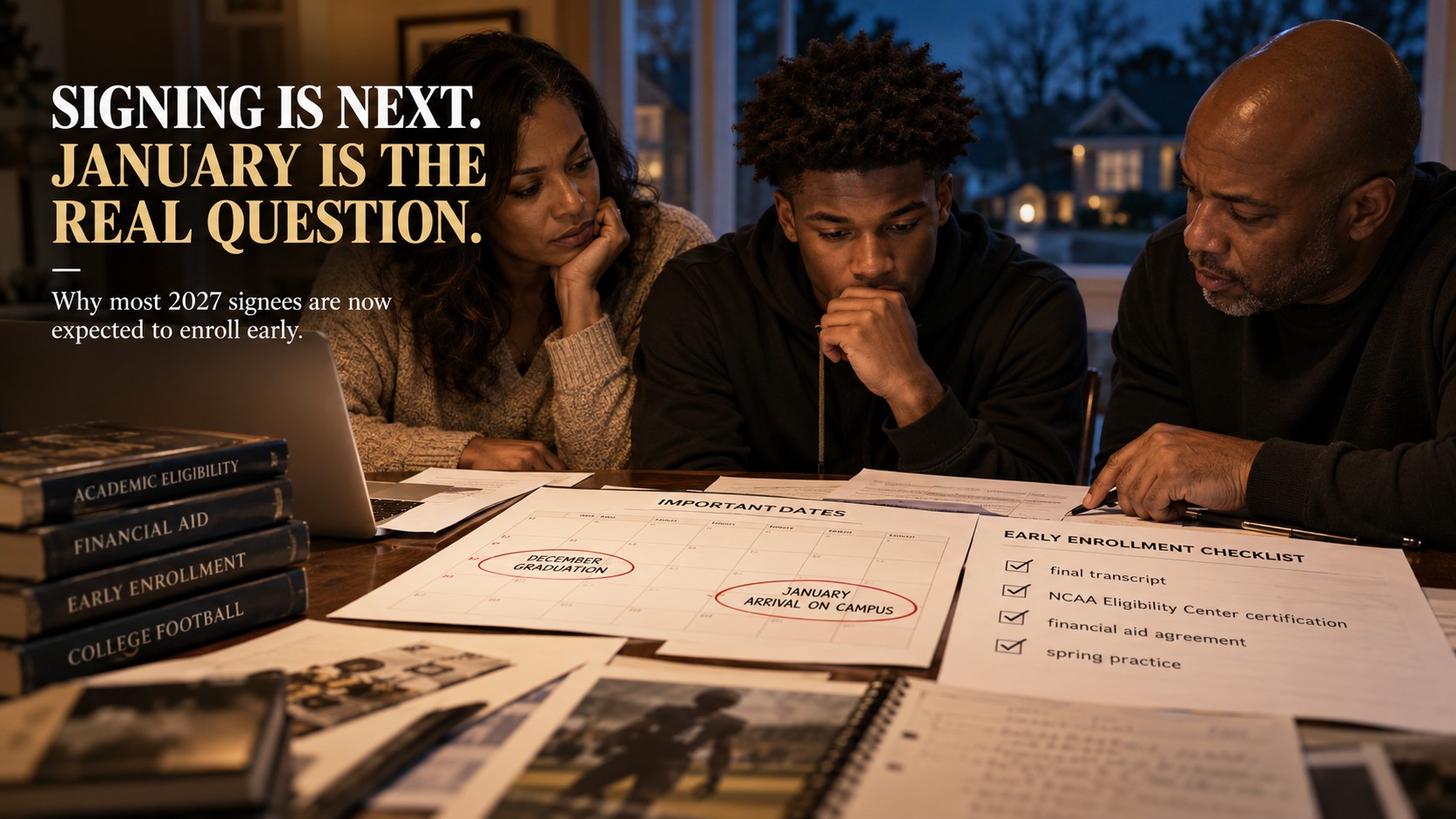
The expectation has shifted
Six weeks from the early signing period, most 2027 families are focused on where their athlete will sign. The question programs will ask almost immediately after is whether that athlete will enroll in January.
Early enrollment, arriving on campus in January rather than August, has moved from an option to a near-standard expectation at major programs. In recent recruiting cycles, a clear majority of top-ranked prospects enrolled early. At programs competing at the highest level, arriving in August as a true freshman is increasingly the exception.
What January enrollment actually requires
A 2027 senior who wants to be on campus by mid-January needs to satisfy several requirements before the signing period even opens:
- Graduate from high school in December, not May
- Have a final transcript submitted for NCAA Eligibility Center certification
- Be certified by the NCAA Eligibility Center before enrollment begins
- Have a signed financial aid agreement in place by the December signing period
The Eligibility Center piece matters most. There is no hard deadline for registration, but certification must be complete before an institution can release scholarship funds. An athlete who arrives on campus without certification cannot receive scholarship benefits until the issue is resolved. For a family that has not yet registered, the time to do so is now.
Why programs push for January arrivals
The short answer is spring practice. FBS programs hold 15 spring practices, typically running from late February through April. An early enrollee arrives for those sessions. An August enrollee does not.
That difference compounds with the transfer portal. Programs that lose scholarship players in January need depth on the spring roster, and early enrollees fill that gap. Coaches recruiting a position group with portal attrition will ask the enrollment question more urgently. Whether that program pressure is a reason to enroll early or simply background context is a judgment call families should make before they are asked.
The developmental case is genuine. Recruits who arrive in January gain six months of college-level strength training, playbook study, and program integration before fall camp. At programs where depth-chart competition is immediate, that head start is real.
What families should work through before December 2
The enrollment conversation usually does not feel pressured when it comes up after signing. But families who have not thought it through in advance are more likely to answer on the program terms rather than their own.
A few questions worth having ready:
- Is the athlete graduation timeline compatible with a December ceremony?
- Are there academic, personal, or family reasons to preserve the second semester of senior year?
- Has the NCAA Eligibility Center account been registered and is the academic record current?
- Does the program have spring roster openings at the position, and is the ask coming from genuine developmental interest or from a roster gap?
Enrolling in January is the right call for many athletes. It is also a real commitment with real implications for the second semester of senior year. The families who treat it as a deliberate decision rather than a reflexive yes tend to feel more in control of the process overall.