

On September 1, Division I coaches began placing their first direct calls to 2028 recruits. High school juniors who had been reachable only by text and questionnaire can now receive a call from a college coach. The contact window is open.
For families who heard from programs in the past 48 hours, the natural response is to treat that call as a signal to act. In most cases, it is not. September marks the start of a contact period, not a commitment decision window. What families do over the next 90 days determines what programs are building in their evaluation files ahead of spring.
What fall contact actually looks like
For 2028 recruits, fall is not primarily a calling season. Coaches can contact prospects once per week during contact periods, but the more significant evaluation activity happens in person. From September through November, college staff members are attending high school games, reviewing updated film, and forming the assessments that will drive which families receive junior day invitations in January and February.
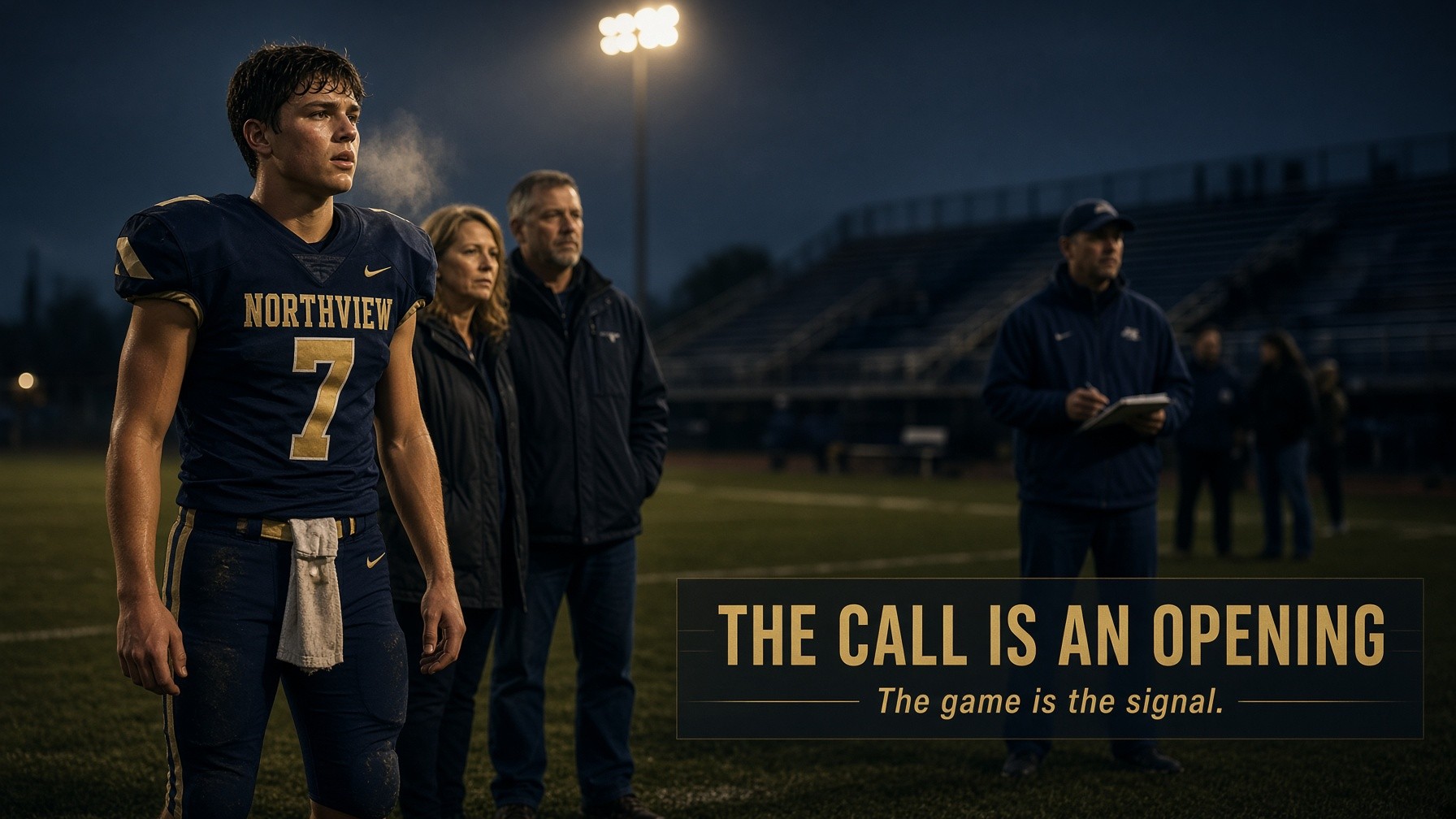
The call is an opening. The evaluation trip to a Friday night game is the deeper signal.
Families who understand this distinction use fall well. They make sure the athlete is performing in front of programs that matter. They keep film current and accessible. They respond to coaches professionally without over-interpreting every interaction as a direct measure of offer likelihood.
The lesson from the 2027 cycle
The 2027 recruiting cycle accelerated faster than any class in recent memory. According to ESPN recruiting coverage, more than half of the top 300 prospects held commitments by mid-May 2026, a rate significantly higher than the previous class. A meaningful portion of those early decisions were driven by compensation conversations that began well before official visits.
That pattern will likely shape the 2028 cycle in some form. But it does not play out in September of junior year.
For most 2028 families, the September call starts a relationship that develops through fall evaluation, winter junior days, and spring official visits before a serious commitment decision comes into view. Treating September with the urgency that belongs to the following spring misreads where the cycle actually is.
What the next 90 days should look like
Families with a 2028 athlete now receiving program contact should focus on three things this fall.
- Give coaches a reason to come to games. Current film, a strong schedule, and consistent performance all factor into whether an evaluation-period visit happens. Programs that expressed early interest in September decide how seriously to pursue it based on what they see between now and November.
- Respond to program contact consistently and professionally. One call per week is a relationship, not a reporting requirement. How a family represents itself in early contact shapes how a program views the athlete long before any visit is scheduled.
- Ask good questions. Fall is the right time to understand a program's offensive system, position needs, and academic resources. It is not the time to press for a timeline. Families who ask informed questions in September tend to be better positioned for the more consequential conversations that arrive in spring.
A starting line, not a finish line
The opening of the September calling window is a genuine milestone for 2028 families. It is also the beginning of a process that, for most athletes, extends 12 to 18 months before a real decision is required.
Programs reaching out now are beginning an evaluation, not closing one. Families who treat this fall as a window for visibility and relationship-building rather than a moment of urgency tend to arrive at spring with more clarity, more options, and less noise in their decision-making.