

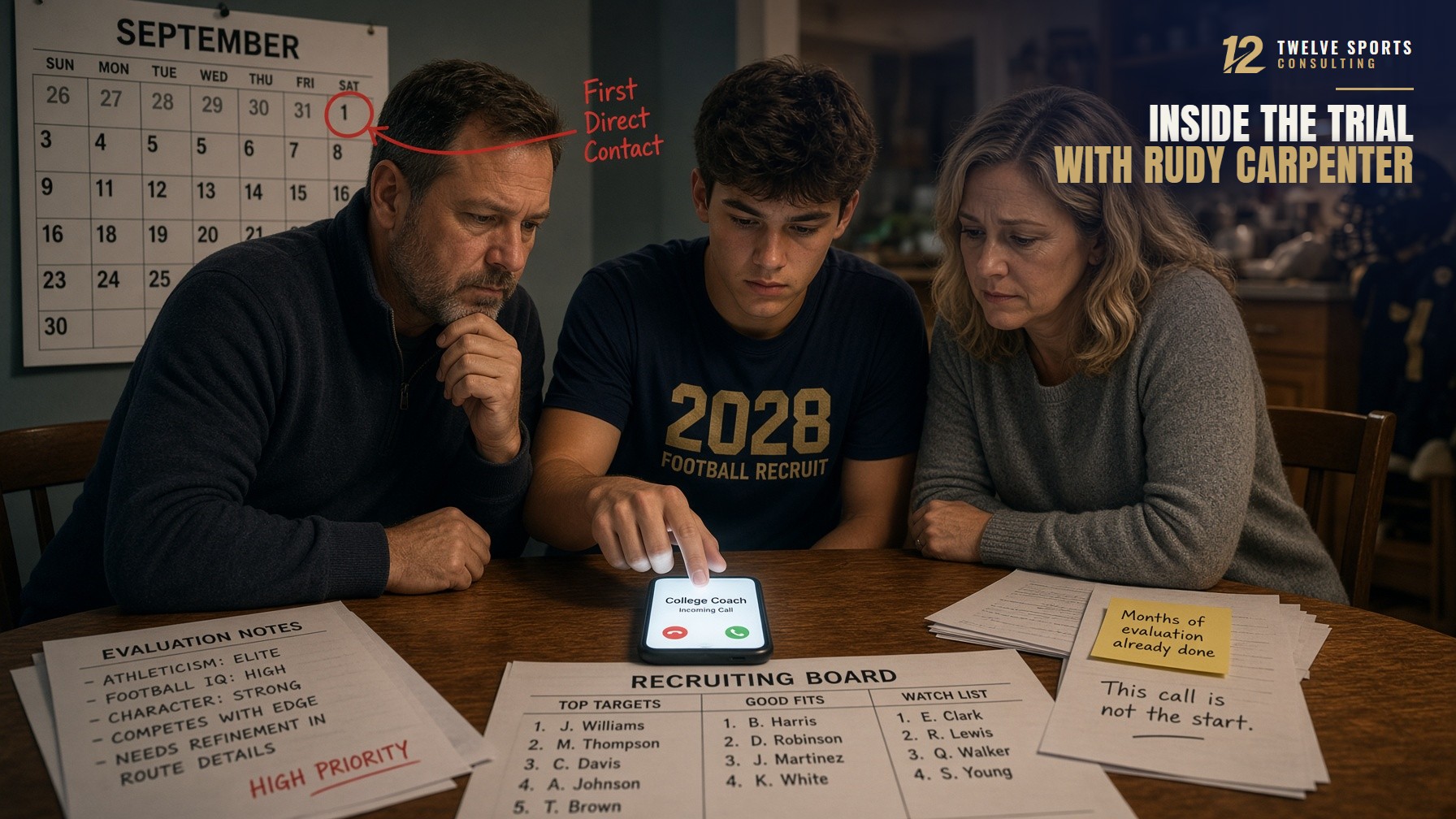
Inside a coaching staff, the September 1 call list for the next class starts taking shape earlier than most families realize. By the time fall camp opens in August, most staffs have already gone through multiple rounds of internal discussion about their 2028 boards. Position coaches nominate athletes from camp observations, from film review, from conversations with high school coaches. Coordinators push back, add names, adjust. The head coach signs off on a priority tier.
What that means in practice: the call your athlete receives on September 1 is not spontaneous. It reflects a decision that was made weeks or months before the calendar flipped.
I spoke with a position coach recently who described this process plainly. The September 1 list at his program runs through three filters: who did the staff see in person this summer, who impressed them when they saw him, and who fits a real need on their current board. Athletes who cleared all three were in the first wave. Athletes who cleared one or two might still get a call, but it would come later. That phrase, "fits a real need on our board," is worth sitting with.
What a real need actually means
A coaching staff's recruiting board is built around position group needs, not just talent rankings. Before a position coach starts nominating 2028 prospects, he usually has a clear picture of what his room will look like in two years. He knows where the depth is, where the holes are, and what type of player fits the scheme they want to run. A highly rated athlete at a position where the program is already loaded may not move a staff to act quickly, even if the player is excellent.
This is one of the things that makes the timing of a first call more informative than people recognize. When a staff contacts a 2028 quarterback in the first week of September, they are usually telling you something specific: they have a real need at that position, they have watched enough film to believe this athlete could fill it, and they want to establish a relationship before other programs do.
When a staff calls in October, the message can still be positive, but the urgency is lower. Either they have more depth at the position, they are still evaluating film, or other programs moved faster and they are catching up. The time of the first contact is not random. It reflects where the athlete sits on the staff's internal priority list relative to their board needs and relative to other targets at the same position.
The gap between on file and on the list
Most families know which programs have received their athlete's film. Fewer know whether that film has been reviewed in a staff meeting, discussed by a coordinator, and placed on a call list. There is a meaningful difference between a program that received a film link and one that has made an internal decision about the athlete.
The summer camps mattered here. Staffs build their evaluation lists from in-person observations first. If a 2028 athlete attended a program's camp and stood out, the position coach already has a face to go with the film and a conversation to build from. If the athlete was not there, the film has more work to do, and the relationship is starting from zero. That does not mean it cannot develop, but it does mean the first September call, if it comes, carries a different level of prior investment behind it.
By this time next year, the 2028 class will be getting recruited hard across every level. The families who will be most prepared for that are the ones who understand now that September 1 is not when recruiting begins. It is when the internal work coaching staffs have already done becomes visible to the outside. The calls are the output. The months of evaluation before them are the input.
Before September 1 arrives, do you know the difference between the programs that have your athlete's film on file and the programs that have actually put him on a list?