

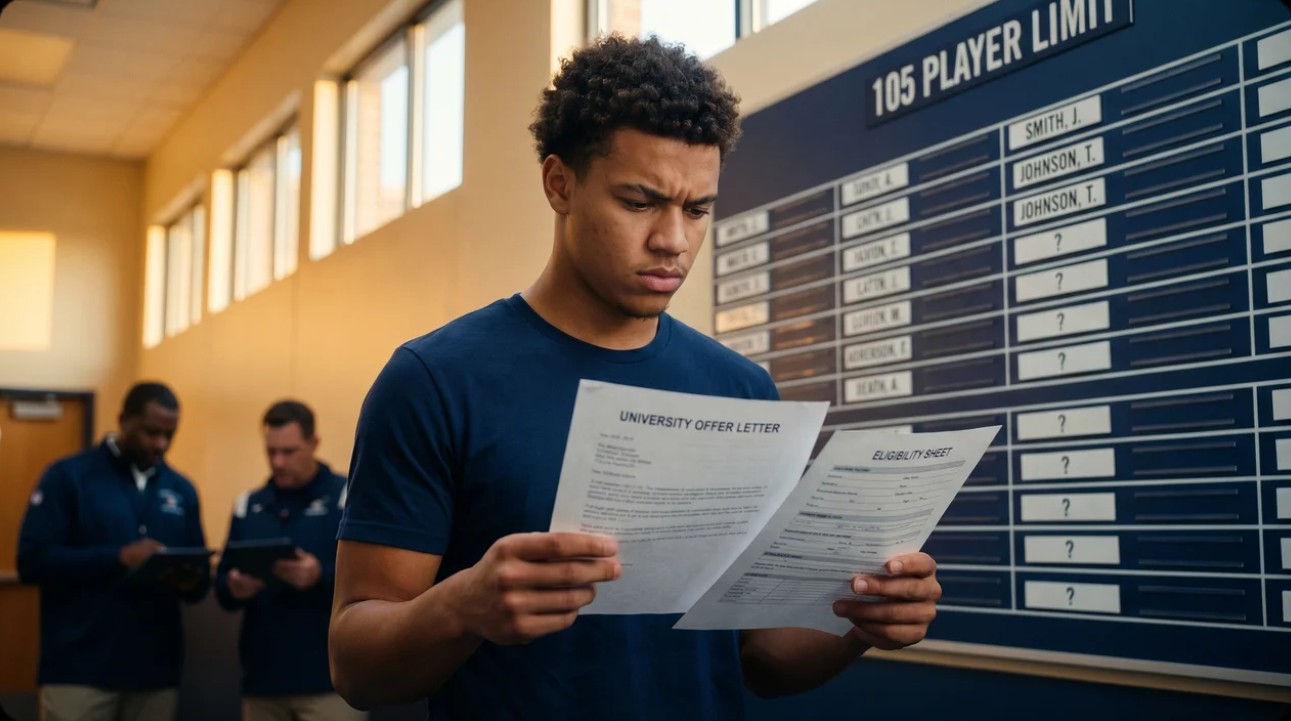
The number is 105
Every FBS roster is now capped at 105 players. The limit took effect on July 1, 2025 as part of the House settlement, and 2026 is its second season in force. The change is structural. Under the old model, a program could award 85 scholarships and still carry a deep bench of walk-ons, which pushed many rosters past 120. The cap removed that overflow. Every spot, scholarship or not, now counts against the same number.
The walk-on path narrowed. It did not close.
The preferred walk-on, a recruited roster spot offered without a scholarship, used to live in the space beyond those 85 scholarships. A hard cap of 105 changes that. Now every non-scholarship spot competes with every scholarship spot for the same line on the roster. There is also a near-term squeeze from grandfathering. Players whose spots would have been cut are protected for the rest of their eligibility as Designated Student-Athletes, and they run out their years before the math fully settles.
The path still exists. Programs are still signing preferred walk-ons for the 2026 class, often in-state and at specific positions of need. The offer has not disappeared. It has become smaller and more deliberate, which means it carries more information than it used to.
What it means for a family now
For a 2027 or 2028 athlete who projects as a developmental recruit, or who sits on the line between walk-on and scholarship, a preferred walk-on offer is worth taking seriously. It should also be read for what it is. It is a roster spot and a chance to earn a scholarship later. It is not a scholarship today.
The useful questions are specific. Where does the program sit against its 105 right now. How many grandfathered players remain on the roster. What has the path from preferred walk-on to scholarship actually looked like there over the last two years. A calm, factual conversation on those points tells a family far more than the label on the offer does.