
What the core-course lock settled
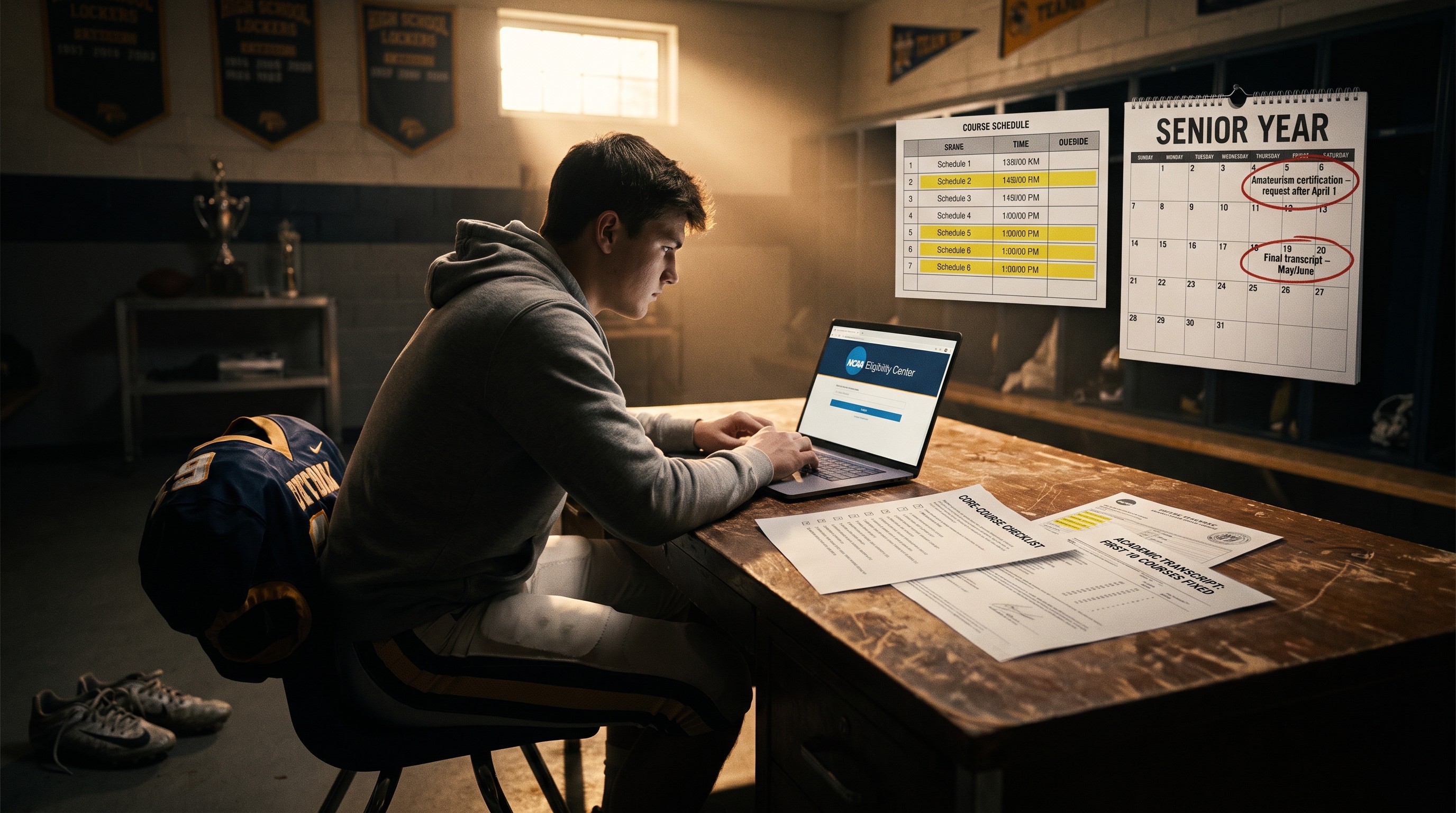
When a 2027 athlete's senior year began, the NCAA Eligibility Center locked the grades from the first ten of the required sixteen core courses. Those grades cannot be improved through retakes or grade changes. Whatever GPA was in place at that moment is now fixed for those ten courses.
That lock resolved one thing: the first two-thirds of the core-course record. It did not resolve eligibility.
What still needs to happen
Six additional core courses remain. They will be completed during senior year, and their grades will factor into the final core-course GPA. That matters because the Division I minimum is a 2.3 GPA across all sixteen courses. If the locked ten average 2.4 and the six senior-year courses fall well below that, the final GPA can still come up short.
Beyond academic performance, two more steps must be completed before a 2027 athlete can be fully certified.
- Amateurism certification: This is a separate track from academic certification. The athlete must request a final amateurism certification beginning April 1 of senior year (for fall enrollees). The Eligibility Center and the program both need to see this cleared before signing.
- Final transcript submission: After graduation, the high school sends the official final transcript with proof of graduation directly to the Eligibility Center. The account is not ready for final review until that document arrives.
Where problems tend to surface
Most eligibility issues that appear late in the process come from one of three places: senior-year grades that pull the cumulative GPA below 2.3, a course on the senior schedule that does not appear on the school's approved core-course list, or an amateurism flag from a prior activity such as social media monetization, a summer work agreement, or a paid training arrangement.
Programs recruiting uncommitted 2027 athletes are aware of which families have open eligibility questions. A strong athlete with a certification question and a slightly less accomplished athlete with clean certification will often move through a program's board differently.
What families should check now
- Log into the Eligibility Center account and review the current status. Academic status marked as not yet final is normal at this point. Any amateurism flags deserve immediate attention.
- Review the senior-year course schedule and confirm each course appears on the school's NCAA-approved core-course list. One substitution in the wrong category can change the count.
- For athletes considering early enrollment, the amateurism certification request window opens October 1 for winter enrollees. That timeline arrives sooner than most families expect.
- Final transcript submission for spring graduates should be planned for May or June, not deferred to summer.
NCAA eligibility certification is a process with distinct checkpoints, not a single event. For 2027 families who feel their athlete's academic eligibility is in good shape, the steps ahead are manageable. The families who avoid late surprises are almost always the ones who treated the Eligibility Center as an active account to monitor throughout the year, not a form to file once and forget.