

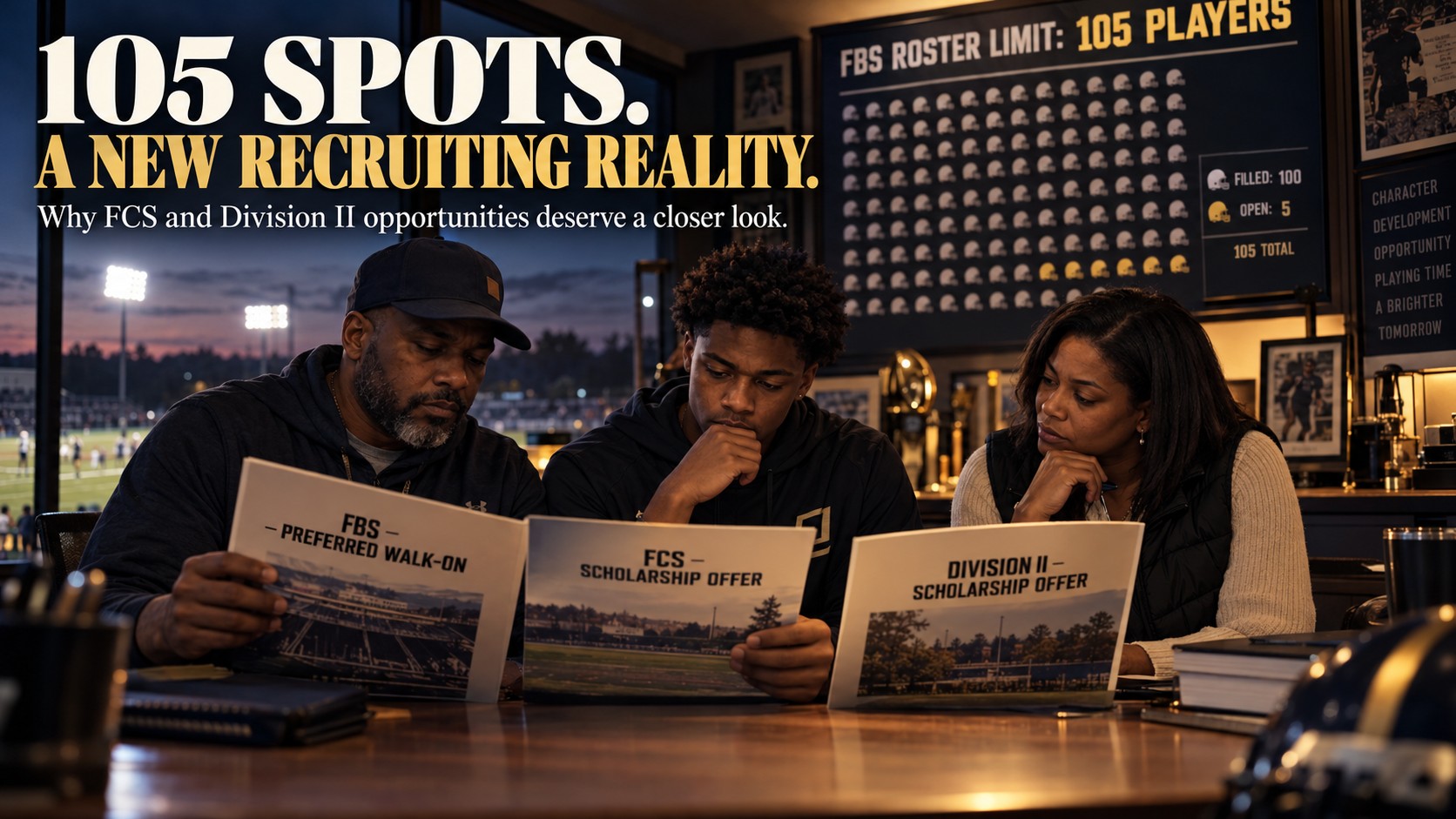
Since July 1, 2025, every FBS program that opted into the House v. NCAA settlement has operated under a hard 105-player roster cap. Walk-ons, scholarship players, and preferred walk-ons all count toward the same ceiling. The old model allowed 120 or more players on an FBS roster. The difference, roughly 15 to 20 spots per program, has been enough to change the shape of the recruiting market below FBS.
What the old model allowed
Under the previous structure, the 85-scholarship limit left walk-on spots outside the count entirely. Programs routinely carried 120 or more players. Across 130 FBS programs, the cap effectively removed roughly 2,000 total roster spots from the system.
The immediate result: athletes who previously would have received preferred walk-on offers at FBS programs are no longer finding those invitations at the same rate. Programs funding close to all 105 spots have minimal room for athletes who are not competing for immediate contributions.
What it means for families at the FBS margin
Two things have changed for families whose athlete is being evaluated at the FBS level.
First, a preferred walk-on offer now carries more weight. A program with 105 spots committed has genuinely chosen to give one up. That is a more substantive signal than the same offer carried in the 120-player era.
Second, the question to ask before signing has sharpened. Families should verify whether an offer represents a guaranteed roster spot for the first day of competition, or an evaluation that depends on fall performance. The distinction matters more when programs fill their 105 spots faster than they ever filled 125.
Why FCS and Division II offers deserve a longer look
The downstream effect of the cap is visible in the markets below FBS. FCS and Division II programs are now competing for athletes with FBS-caliber physical profiles, athletes who in previous cycles would have signed as FBS walk-ons or never entered their evaluation pipeline.
An FCS scholarship offer today represents a different competitive environment than one from three years ago. The same is true at D2.
Division fit has always been about development, playing time, and trajectory. For families sorting through offers at different levels this fall, the old mental hierarchy (FBS always beats FCS regardless of role) is worth examining. The logo matters. The role on the roster matters more.