

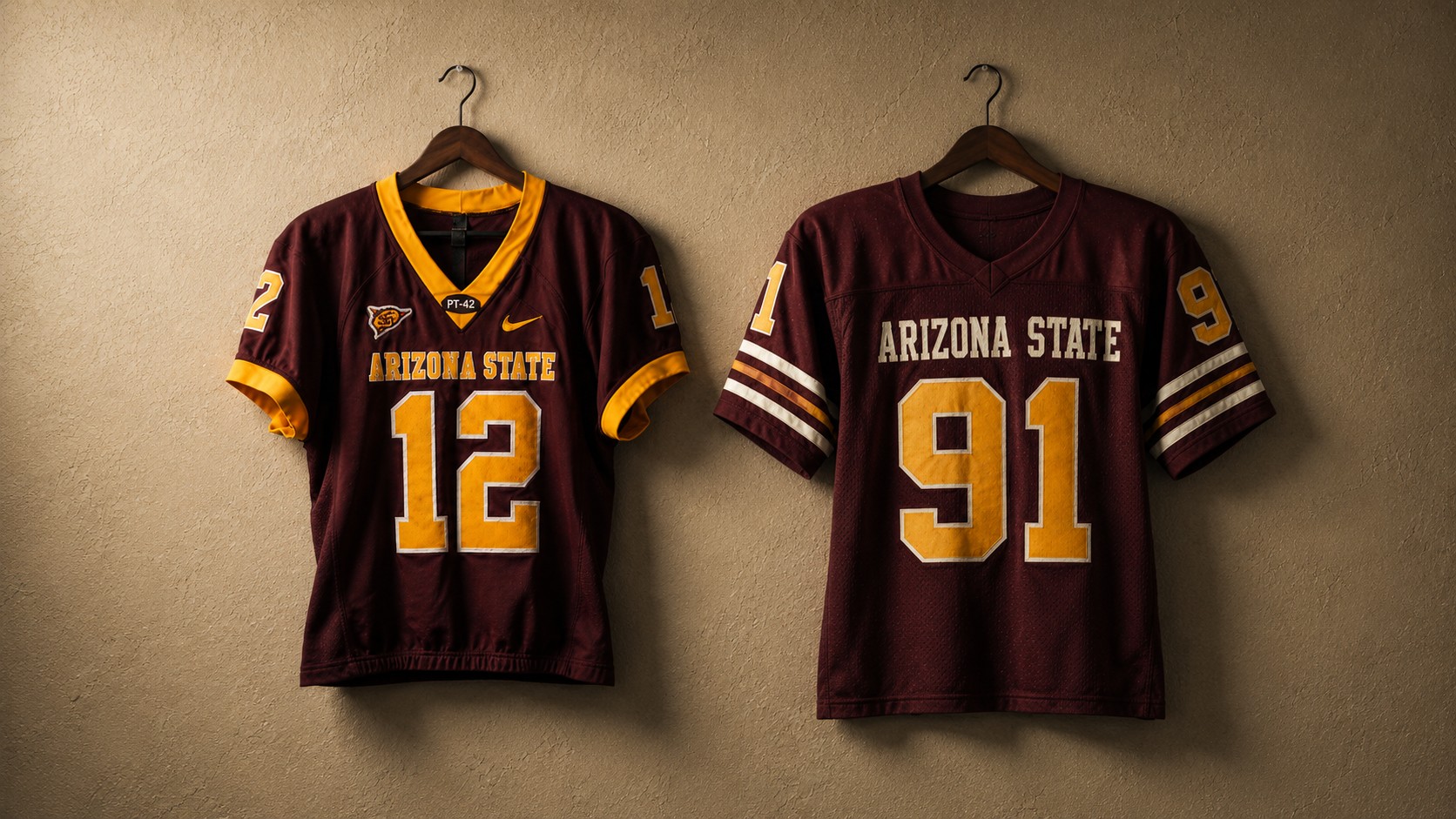
I played quarterback at Arizona State. After that, a few years in the NFL with the Cowboys and the Buccaneers.
Before either of those things happened, I was a kid trying to figure out where I fit. My family did not have a roadmap for any of it. We did what most families do. We took the calls. We accepted invitations. We hoped the right people were watching.
It worked out. Most of the time, it does not work out as cleanly as it could, and the reason almost always traces back to the same thing: nobody was running the process. Things happened, and the family responded.
I have spent the last several years watching families go through what my family went through, only with more noise around it and higher stakes underneath it. Twenty years ago you got a letter or you didn't. Today every kid with a Hudl account thinks he is being recruited, and every family is trying to read tea leaves on whether the interest is real.
This is why I started 12 Sports Consulting with Gary Knudson. Not to add to the noise. To run the process the way it should have been run for my family, and the way I now run it for the families that work with us.
Three words frame everything we do. Navigate. Compete. Commit. They are not a slogan. They are how I think about every athlete I take on.
Navigate
The first conversation I have with a new family is usually about exposure. They want more of it. They have been told that more views, more camps, more eyes on their son is how this works. I do not blame them. That is the message the industry sells.
Here is what I learned playing quarterback and now sitting on the other side of the recruiting table: exposure is not the goal. Direction is.
When I was being recruited, the coaches who mattered already knew who I was. The question was never whether more people would see my film. The question was whether the right people were going to spend real time on it, and whether what they saw was going to make them pick up the phone. Two very different things.
I see families make the same mistake my own family almost made. They confuse activity with progress. Three camps in May feels productive. It is not, if the wrong staffs are at the wrong camps and the athlete is in there with three hundred other kids burning two days of school for a tee shirt and a Instagram clip.
Navigation, the way I run it, means three things.
First, I tell families where their son actually stands. Not where they hope he stands. Not where some recruiting service told them he stands. Where I would honestly place him, given my own evaluation and the staffs I talk to every week. Sometimes that conversation lands the way the family wanted. Sometimes it does not. Either way, it is the foundation.
Second, I tell families what matters now and what does not. A sophomore in May has different priorities than a junior in October. A quarterback talking to Pac-12 staffs has different priorities than an interior lineman talking to Group of Five staffs. I have seen enough of this from enough angles to know the calendar, and the calendar is different for every kid.
Third, I give families a person to call when the next opinion shows up. And it will show up. A high school coach will say one thing. An uncle who played D2 ball will say another. A camp organizer will pitch hard. A third-party service will promise reach. None of those voices is wrong. They are uncoordinated. My job is to hold the plan, run new information against it, and tell the family when something should change the path and when it should not.
When I have a family in navigation, the noise gets quieter. They stop reacting. They start choosing. They know why they are doing what they are doing, and they have one number to call when they are not sure.
Exposure is not the goal. Direction is.
Compete
Talent matters. But I have watched plenty of talented kids leave yards on the field in recruiting because nobody positioned them, nobody walked the staff through what they were looking at, and nobody made sure they were in front of the right coach on the right day.
Positioning starts with materials. Let me be specific, because this is where I see the most wasted effort.
A real recruiting profile is not a Hudl link forwarded to fifty schools. It is a coordinated package. A clean highlight reel that I chose, because I know what college coaches actually want to see in the first ninety seconds. Full game film organized so a coordinator can scrub through it without hunting. For my quarterbacks, a controlled-setting evaluation video where the staff can see the throws without Friday-night chaos around them. A written evaluation with my name on it. And an academic and character profile that does not make the staff dig.
When that package lands together, it lands differently. Coaches are not assembling the athlete from fragments. They are looking at a complete picture, and the first impression is professional. I know this works because I am the one delivering it, and I see what comes back.
The second half of competing is communication. This is where my phone and my relationships earn their keep.
I know which staffs to call first for which kind of athlete. I know which junior days are worth a 14-hour drive and which are a hotel bill with no return. I know which spring camp on June 12 has the position coach in the building running the workout, and which camp on June 19 is going to be three GAs with a stopwatch. I know when an offer is an actual offer and when it is a placeholder while the staff waits to see how their first three at the position shake out. I know because I have been making these calls for years, and because the staffs on the other end of the phone know who I am.
This is the single biggest variable in how families experience the competing phase. A family running this themselves is making these judgments for the first time, with no comparison set, on incomplete information. I am making them for the hundredth time this year, off the same coaches I called last year and the year before.
Showing up matters too. In person. A workout in front of a position coach is not the same as a workout in front of a head coach. A visit during a coach-led period is not the same as a visit during a quiet window. Families who treat all of these moments as interchangeable lose the leverage that competing is supposed to create. The kids who finish recruiting with the strongest set of options are almost never the ones who had the most exposure. They are the ones who competed best at the moments that actually mattered.
A family running this themselves is making these judgments for the first time. I am making them for the hundredth time this year.
Commit
The third part of recruiting is the part everybody wants to talk about and almost nobody prepares for properly.
An offer is not a decision. It is information. The decision comes later, sometimes weeks later, sometimes months. The window between the first real offer and the final commitment is where I see most recruiting mistakes get made. I have walked enough families through this window to know exactly how it sounds. The pressure feels real. The clock feels short. The voice in the room saying what if there is something better gets louder. The voice saying what if we miss it gets louder still. And the family is asked to make a multi-year decision in an environment that does not reward careful thinking.
Committing well is not about closing the process faster. It is about closing it at the right moment, for the right reasons.
I walk every family through three questions before any commitment is final.
The first question is fit. Not fit in the abstract. Fit specifically. What does this position room look like in two years. What is the coordinator's actual philosophy and how does your son read inside it. What happens to the depth chart if the staff changes, which it might. Parents know to ask about fit. They don't know how to take it apart. That is my job.
The second question is timing. Is there a real reason to commit now. Sometimes there is. A spot is finite. A staff is sincere about a deadline. The family has done the work and the conviction is genuine. Other times there is not. The pressure is manufactured. The deadline is soft. The competing offers being implied are not actually likely. Knowing the difference is not a guess. It comes from being inside the process long enough to recognize the patterns, and from being on the phone with the staffs in question.
The third question is alternatives. What is the realistic best-case version of the path that says no to this offer. Not a fantasy version. A real one. If your family commits to School A, what do the next 60 days probably look like at School B and School C. If you wait, what is the most likely thing that changes. Asking that question out loud, in advance, takes the fear out of the room. And fear is what drives most of the premature commitments I have seen.
When the three questions have honest answers, the family knows. I see it in their faces. The commitment does not happen in a moment of pressure. It happens in a moment of clarity, with full information, after the work of the prior six or twelve months has done its job.
That is what a Letter of Intent should feel like. Not relief that the process is over. Confidence that the path forward is the right one.
That is what a Letter of Intent should feel like. Not relief that the process is over. Confidence that the path forward is the right one.
One discipline. One process. One family at a time.
Navigate. Compete. Commit. That is the discipline I run. It is what I would have wanted in my own house twenty years ago, and it is what I deliver to the families that work with me now.
If your family is in the middle of this process and the noise has started to feel louder than the path, the next step is a conversation with me. Fifteen, thirty minutes. We will talk about where your son is, what matters most right now, and whether the advisory is the right fit.
You will leave the call knowing where your son stands. That alone is worth the half hour.
Schedule a Consultation → 12sportsconsulting.com/apply