

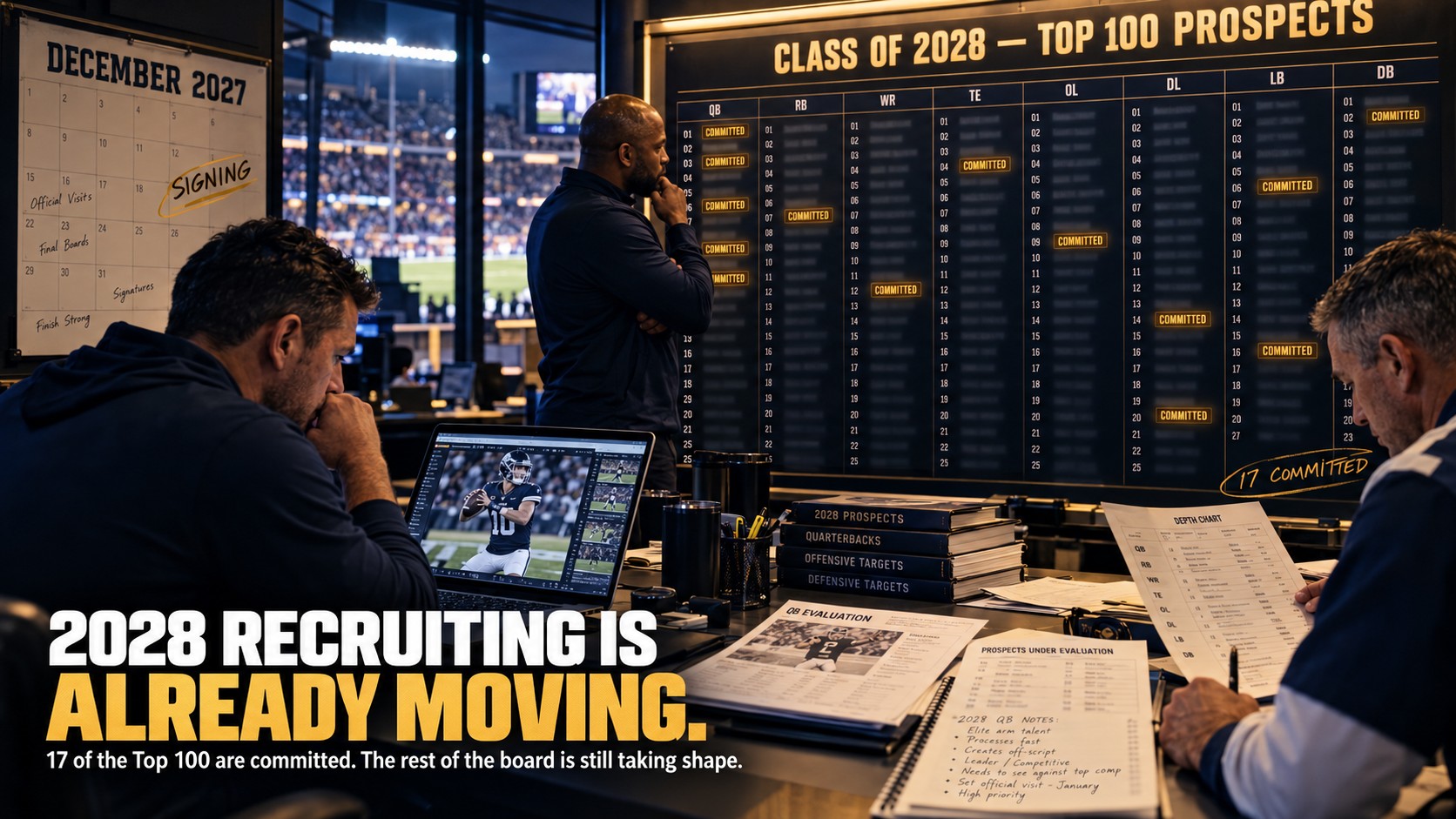
Seventeen of the top 100 prospects in the 2028 recruiting class have already committed, according to recruiting tracking data from early October. The class does not sign until December 2027. That is more than a year away. The timeline gap is not as wide as it has been in recent cycles.
Quarterbacks are leading the early wave
The earliest and most significant commitments in the 2028 class have come disproportionately from quarterbacks. That pattern reflects something coaches have understood for years: at programs where the quarterback position drives the offense and the recruiting brand, locking in the right prospect early protects the rest of the board. When a program secures its quarterback, it can build the surrounding class with more specificity.
For families of current junior quarterbacks who are not among those early commitments, the question is not whether this pace should create urgency. The question is whether their athlete is positioned where programs can evaluate them clearly.
What the early commitment rate signals about available spots
The programs earning early commits in the 2028 class are typically Power 4 programs with established recruiting pipelines. Their boards are not fully locked, but the early commitment pace does narrow the landscape at the top.
Group of Five and mid-level programs often benefit from this pattern. As elite prospects commit to top schools, visibility at programs still building their boards becomes more valuable, not less. For families evaluating division fit, the early pace at the top does not reflect what the broader market looks like.
What this means for families still in the 2028 market
The D1 contact window for the class of 2028 opened September 1. Coaches have been evaluating current juniors for two months. Some have extended offers. Many are still in evaluation mode.
Families of uncommitted 2028 prospects should not confuse the early commitment pace at the top of the class with the market conditions that apply to their athlete. Elite programs commit earlier than they used to. That does not mean every program is finished building its board.
What it does mean is that families who have not yet established a clear position in the market, through strong film, professional presentation, and strategic coach outreach, may find the landscape has shifted by the time they engage in the spring. The right response is not to rush a decision. It is to make sure the athlete is visible enough that the right programs can evaluate them.