

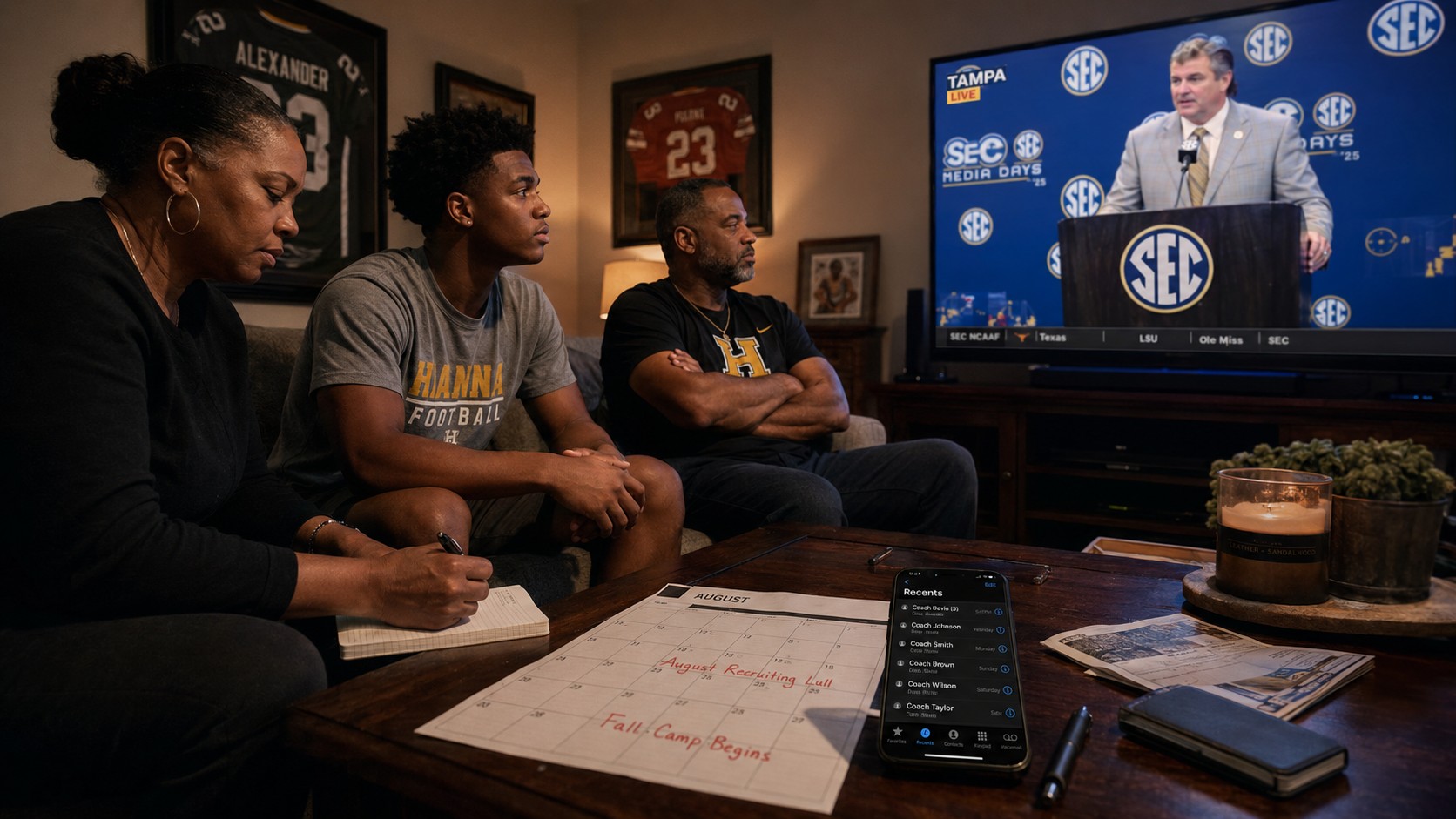
Media Days are underway. Fall camp follows in two weeks.
SEC Media Days runs July 22 and 23 in Tampa. The Big Ten, Big 12, and ACC hold similar events in the same window. Coaches field questions about their programs, discuss their rosters, and make the kind of confident public statements designed for a media audience.
For a family with a 2027 recruit who has been building a relationship all summer, watching a head coach speak confidently about his program can feel significant. The two worlds of public performance and private recruiting interest do not map onto each other the way families sometimes hope.
What a coach says from a podium is not what he is saying in a private call. Those are different conversations, built for different purposes.
What the calendar looks like from here
Programs across FBS begin reporting to fall camp in the final days of July. The 2026 regular season opens August 29, less than six weeks away.
During fall camp, a coaching staff's operational attention is almost entirely directed at the current roster: installing the offense and defense, evaluating depth chart decisions, managing a 105-man group that has to be ready to play a game in five weeks.
For a 2027 prospect who heard from coaches regularly through June and July, during the contact-heavy official visit and summer camp season, August can bring a noticeable drop in communication volume. Phone calls that came twice a week in June may come once a week in August, or less.
The NCAA dead period lifts July 31. Coaches can reach out. Most of them will. But fall camp is not a gap that a recruiting relationship fills automatically.
Why families misread August
Communication volume is an imprecise signal in any part of the recruiting cycle. In August, it is an especially unreliable one.
A coach who was highly engaged in May (visiting your athlete's school, calling regularly, attending a summer camp) is not signaling reduced interest when he goes quiet in August. He is running two-a-days. He has a 105-man roster to manage and an opener to prepare for. The reduction in outreach is operational, not evaluative.
The recruits who occupy a program's August attention are typically the players already on scholarship: current roster members, early enrollees, and committed 2027 prospects managing the back end of their senior summers. A 2027 athlete still in relationship-building mode is in a holding pattern, not a declining one.
What to watch instead
The fall evaluation period opens as the high school season begins, and that is when private interest becomes observable again. Which coaches show up at your athlete's games tells a family far more than how often a coach called in August. A staff member in the stands on a Thursday night in September is a signal. A reduced call frequency in August is not.
For families with a 2027 athlete who built real momentum this summer (legitimate camp evaluations, direct coach communication, a professional profile), the right posture in August is to stay the course. Keep the film current, keep communication lines open, and wait for September.
The program that has genuine interest will come back. August's quiet is almost never about the athlete.