

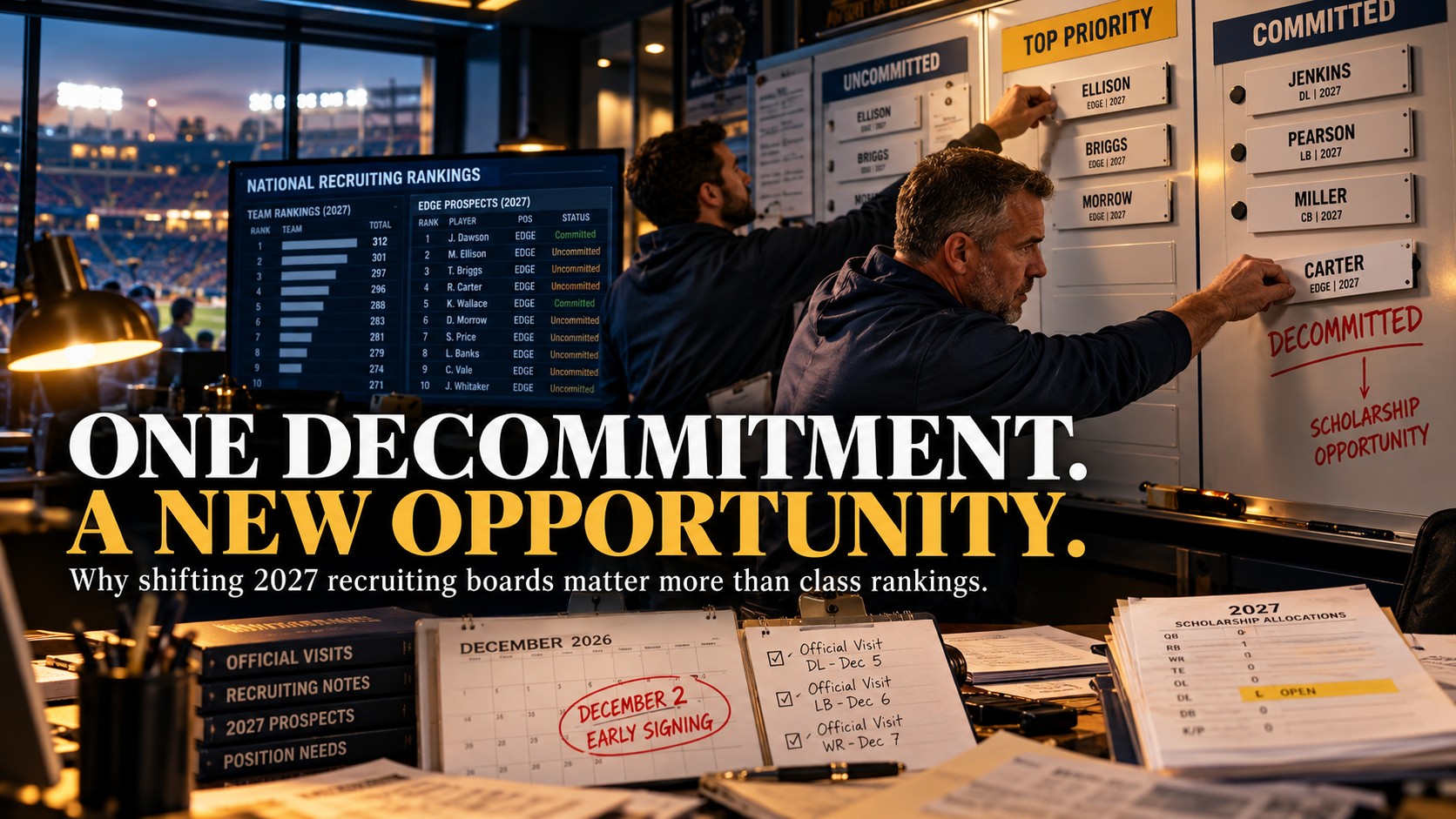
The 2027 class picture with six weeks to sign
The 2027 recruiting cycle is running differently for several programs accustomed to finishing near the top of the national class rankings. Multiple schools historically among the elite are sitting well outside the top 10 with the early signing period opening December 2. Composite rankings from 247Sports place some of those programs outside the top 20, with at least one traditional power outside the top 50.
The underlying cause is partly structural. Twenty-six of the 32 players rated five stars in the 2027 class are already committed, meaning the pool of uncommitted top-end talent is genuinely thin. Programs that planned to add five-star commits late in the cycle have fewer options than in prior years.
What has accelerated the gap is a run of decommitments. Several programs in this group have lost multiple 2027 commits in recent weeks, including at positions they had considered locked. Each departure reopens a position on the board and shifts the recruiting staff’s attention.
What a decommitment does to a board’s priorities
When a program loses a commit at a key position, the board does not pause. Coaches move the next-priority prospects in that position group higher and increase contact frequency. Programs that were managing a full room at a specific position suddenly have an opening, and urgency follows.
For families in active conversations with those programs, the dynamic shifts. Prospects who were being recruited as a fallback may find themselves in more direct conversations. The language from the staff often becomes more specific: timeline questions, visit invitations, and clearer statements about scholarship availability.
This is a normal feature of fall recruiting. The volume of board movement at traditional powers this October is higher than typical.
What falling class rankings don’t mean
A program finishing this cycle outside its historical tier in class rankings does not change its development resources, NFL draft production, or coaching staff quality. Those factors, not ranking snapshots, are the right lens for evaluating whether a school is worth an official visit.
Rankings measure who has signed, not who is coming. A program finishing No. 30 this cycle is often the same program that finishes No. 5 next cycle. Families who use a single-cycle ranking as a signal of a program’s trajectory are reading one data point, not a trend.
The question that matters before December 2
For 2027 families in conversations with any program, inside the top 10 or outside it, the right question before the early signing period is not about class rank. It is about where the staff has your athlete on the board at their specific position group. A program outside the top 50 nationally with a genuine scholarship need at your athlete’s position is more meaningful than an expression of interest from a program that is fully committed at that spot.
The November official visit window is where that question gets answered directly. That conversation is more useful than any ranking update.