

The role that barely existed five years ago
North Carolina hired Mike Lombardi, a former Cleveland Browns general manager, to run its football operation. Stanford brought in Andrew Luck. Cal hired Ron Rivera. Oklahoma pulled Jim Nagy away from the Senior Bowl, and Notre Dame, Nebraska, Florida, and USC have all built out front offices of their own. ESPN now calls the general manager role the fastest growing industry in college football.
A few years ago, recruiting and roster decisions ran through the head coach and his assistants. Today a growing number of programs run them through a dedicated front office, and the people filling those seats increasingly come from the NFL.
What the job actually is
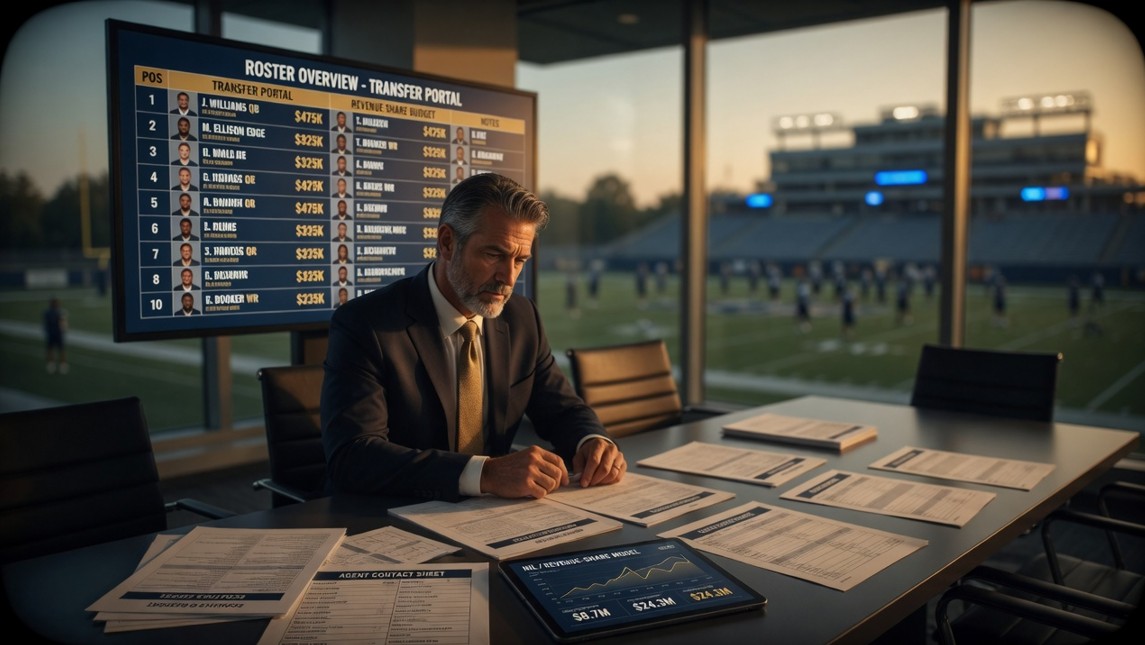
A college football general manager oversees the 105-man roster, evaluates the transfer portal, communicates with agents, and administers a revenue-share budget that rises to about $21.3 million per school on July 1. CBS Sports counts twenty-two front-office executives now shaping how major rosters get built.
In plain terms, the person who decides where an athlete fits on the board, and what a program can actually pay him, is in many buildings no longer the position coach. It is a front-office executive the family may never sit across from.
What it means for a 2027 family
This is not a reason for concern. It is a reason to read the building accurately.
The relationship that recruits an athlete and the office that funds the offer can be two different people. A position coach can be genuinely invested while the front office sets the roster math behind him. Both are true at once, and neither cancels the other.
Three questions help a family see the structure clearly:
- Who evaluates the athlete, and who decides where he fits on the roster?
- Who manages the revenue-share number a program quotes?
- Is the coach in the room building the relationship, or making the decision?
The professionalization of the business side is real, and it is not going away. Even so, recruiting remains relationship work, and NFL experience does not automatically translate to it. The point is not to be wary of a front office. It is to know it exists, understand what it does, and read an offer accurately once you know who shaped it.