

A first test of the enforcement framework
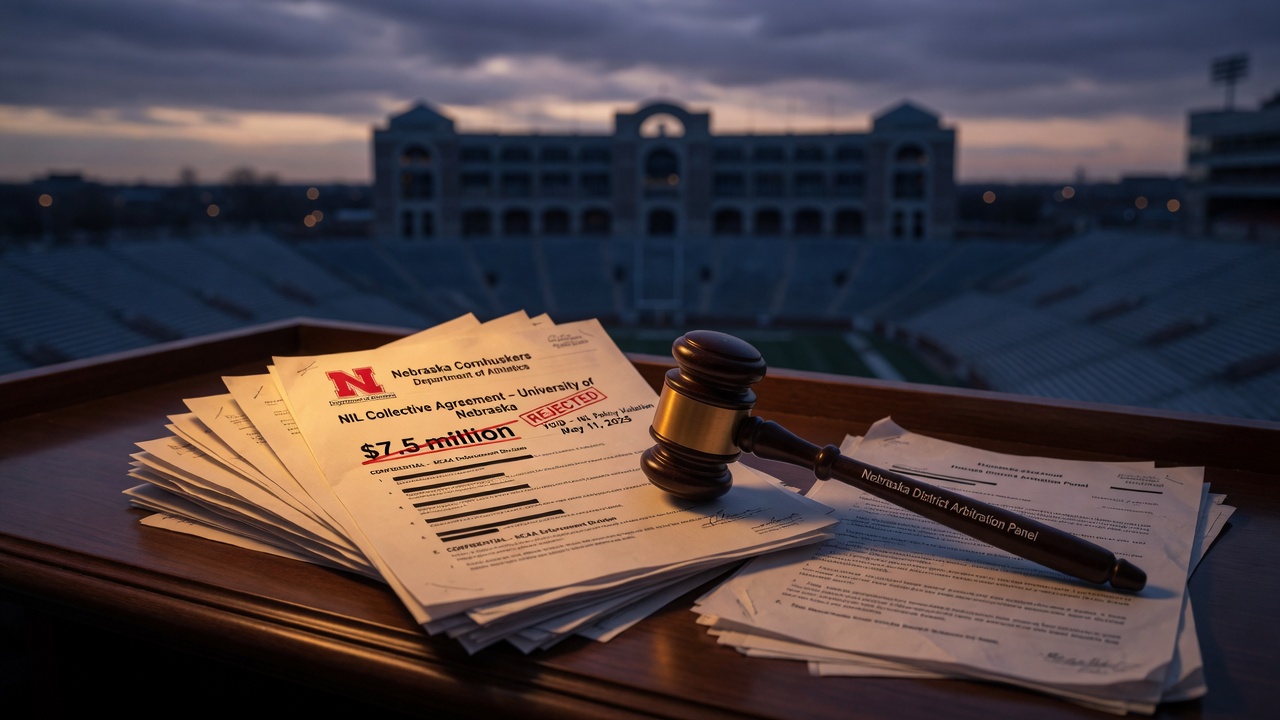
On May 11, a neutral arbitrator upheld the College Sports Commission's rejection of approximately $7.5 million in NIL agreements between Nebraska football athletes and a multimedia rights partner. The arbitration was the first binding test of the CSC's authority under the House v. NCAA settlement. The CSC's rejection stood.
For families and athletes following the post-settlement era, the result is not the most important part of the story. The reasoning is.
What the ruling called "warehousing"
The arbitrator's decision focused on a structural defect in the contracts. The deals compensated athletes for future, undefined NIL opportunities rather than for specific endorsement work tied to a real product or service. The CSC argued, and the arbitrator agreed, that this kind of arrangement, sometimes called "warehousing," lacks the valid business purpose the framework requires.
The decision also confirmed that the multimedia rights firm operating the contracts qualified as an "associated entity" under the settlement. That label triggers the CSC's review authority. The structure of the relationship, not the dollar amount, brought the deals into scope.
What this means for families reading an offer
The number a coach mentions is the start of the conversation, not the end of it. For families weighing the NIL component of an offer, the durable question is no longer only whether the deal has cleared the CSC. It is whether the deal would survive the kind of review the Nebraska decision just modeled.
The signals families can look for:
- The deal is tied to a specific brand, product, or marketing campaign.
- The compensation reflects work the athlete is actually expected to perform.
- The counterparty is identified and the deal structure is documented.
- The relationship between the counterparty and the school is disclosed.
An offer that cannot answer those questions is not necessarily improper. It is the kind of offer the new enforcement framework is built to scrutinize.
What remains unsettled
The CSC's authority over "associated entities" is being tested in court. Counsel for the House plaintiffs has filed a motion in the Northern District of California arguing that the Commission has overstepped its remit. A hearing on a separate motion to enforce the settlement is scheduled for June 10. The line between a regulated deal and an outside deal is likely to move again.
For families weighing offers, the practical posture is simple. Read the offer for structure as carefully as for the headline number. The framework will keep changing. The questions that matter will not.