

What the lawsuit says
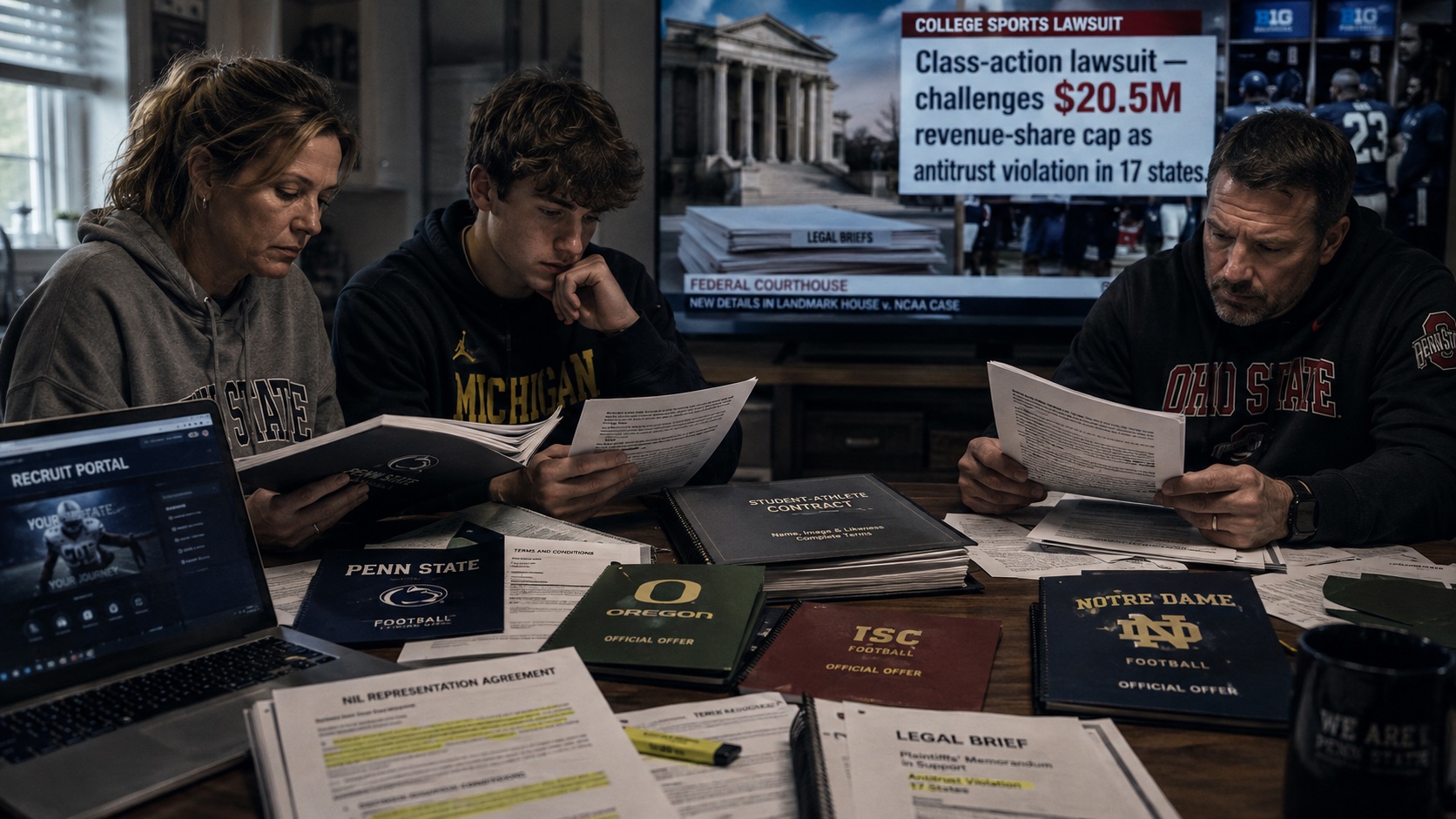
A class-action suit filed June 9, 2026, in federal court in California, challenges the $20.5 million revenue-sharing cap established under the House v. NCAA settlement. The plaintiffs, USC linebacker Talanoa Ili and Stanford quarterback Charlie Mirer, argue the cap violates NIL laws in California and 16 other states, as well as federal antitrust law.
The suit also targets the College Sports Commission requirement that third-party NIL deals serve a valid business purpose. Ili claims a multiyear collective offer disappeared after the settlement took effect. Mirer has received no collective payments since 2024.
The defendants are the NCAA, the Power Four conferences, and the College Sports Commission. The case has been assigned to Judge Thomas Hixson in the Northern District of California.
What it could mean if the plaintiffs succeed
If the cap is enjoined or struck down, schools in the 17 states named in the suit could offer compensation beyond the current $20.5 million ceiling. That would create a meaningful competitive divide between affected programs and those in states outside the suit's scope.
The valid business purpose standard, if invalidated, would remove the clearinghouse authority to reject third-party collective deals on that basis. More than $90 million in deals have already been blocked under that standard since the settlement.
What it does not change today
The cap is still in place. No injunction has been granted. The NCAA is expected to argue that these disputes belong in the settlement's own arbitration process rather than in separate litigation. That procedural fight alone could take months.
Legal challenges to major settlement frameworks rarely resolve quickly. House v. NCAA itself was litigated for years before settlement approval. This case will likely move on a similar timeline.
What this means for families evaluating offers now
The practical guidance is this: evaluate what is in front of you, not what might be true in two years.
A program's offer reflects today's rules. Those rules may change. The legal and regulatory landscape around college athletics has been shifting constantly since the House settlement was approved. Anchoring a decision to anticipated litigation outcomes is not a sound basis for evaluating program fit, financial structure, or an athlete's long-term development.
The lawsuit raises real questions about the future of athlete compensation. Families in the middle of a recruiting decision right now should understand what it is. They should not build a decision around it.