

What changes on July 1
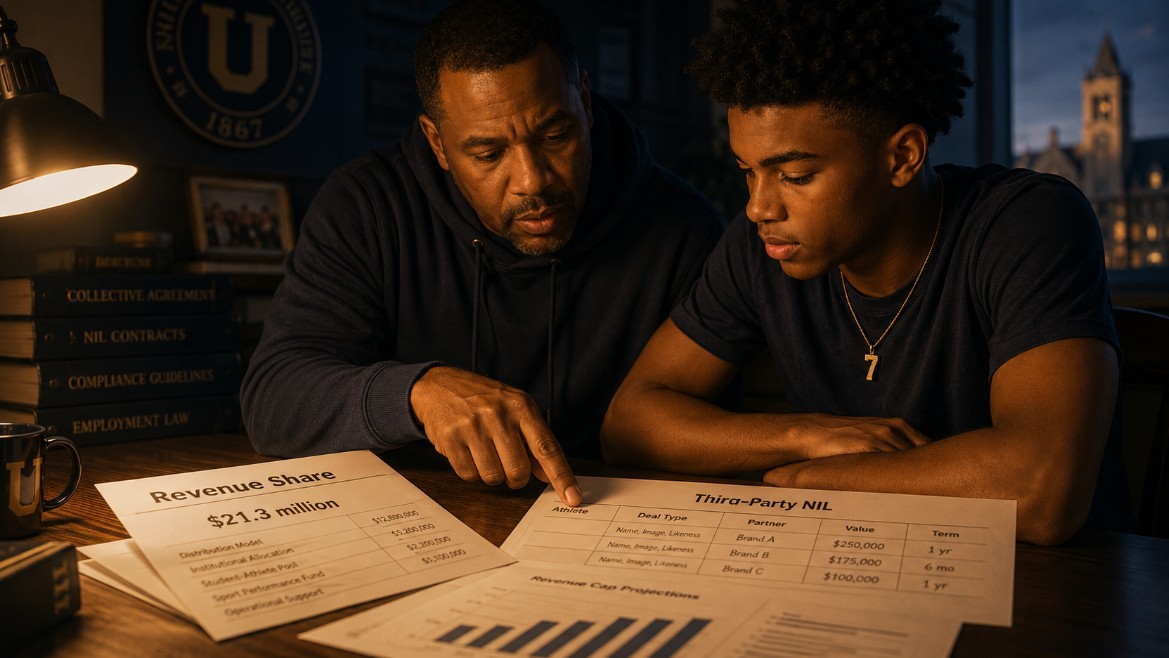
On July 1, the revenue-sharing cap set by the House v. NCAA settlement rises to about $21.3 million per school, up from $20.5 million in the first year. The figure climbs roughly four percent each year for the life of the ten-year agreement. It covers direct payments from a school to its athletes across every sport, not football alone.
Two pools, not one
That capped figure is only one source of the money a recruiting conversation may reference. Direct revenue share comes from the school under a contract and counts against the cap. Third-party money comes from collectives, brands, and donors, and sits outside the cap entirely.
The gap between the two is wide. Most power-conference programs are reported to spend well beyond the capped amount, with the real ceiling at the top of the sport described as closer to $40 million. Almost all of that additional money lives in the second pool.
The clearinghouse sits on the second pool
The second pool is also the one under review. Third-party deals worth $600 or more must be submitted to NIL Go, the clearinghouse operated by Deloitte for the College Sports Commission. Each deal runs through a fair-market-value analysis and comes back cleared, in review, or information needed.
That matters for how a number should be read. School revenue-share dollars are capped but contractual. Third-party dollars are uncapped but conditional. A figure that depends on the second pool is not settled until the underlying deals clear.
What it means for a family now
When a program or collective quotes a number, the useful first question is which pool it comes from. A blended figure that combines guaranteed school payments with projected collective money describes a ceiling, not a floor.
None of this asks a family to master settlement accounting. It asks for one habit: separate what is contracted and capped from what is projected and still under review. The more calmly a family reads the number, the better every conversation that follows tends to go.