

The first single-window cycle has run
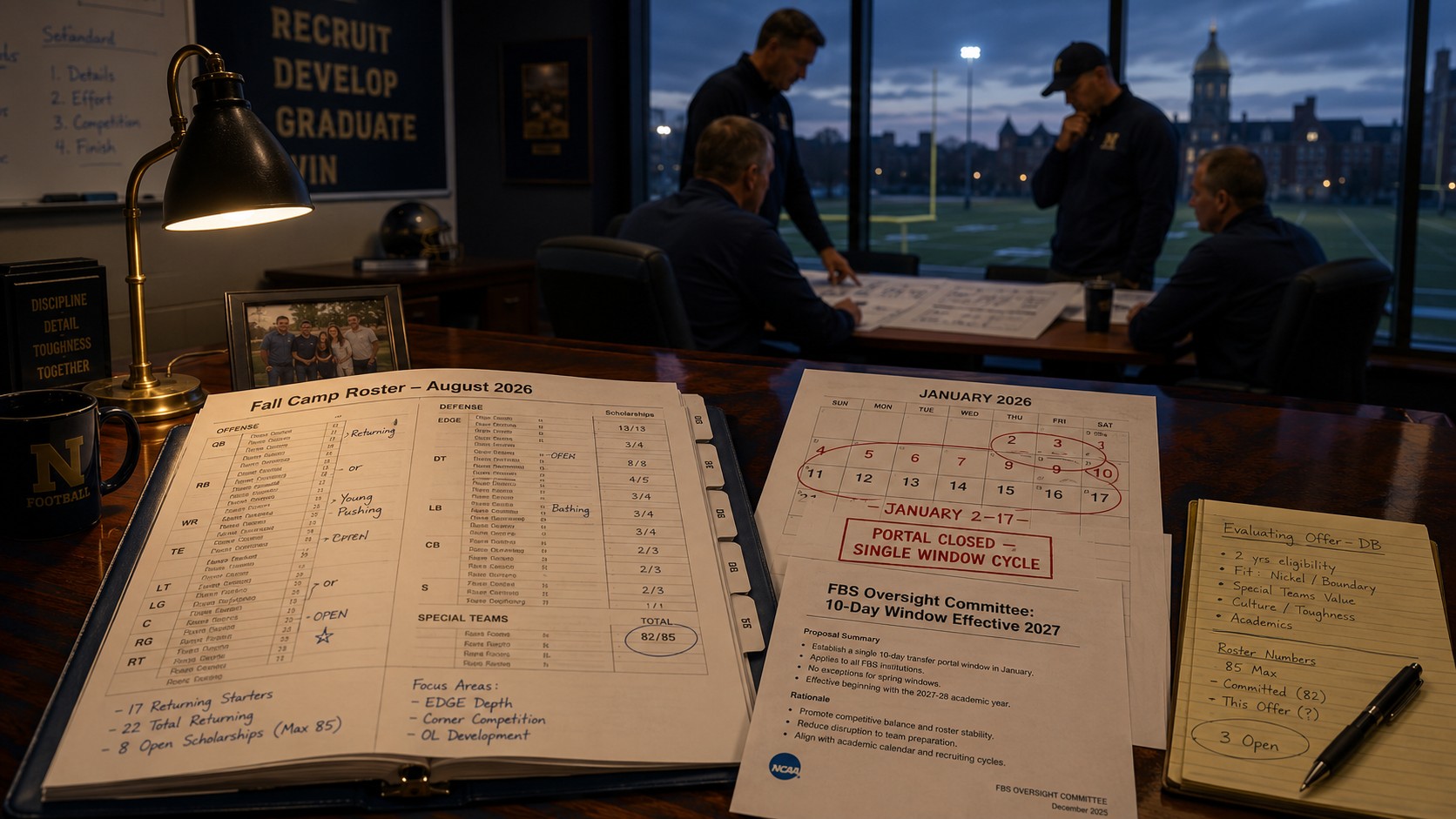
The January 2026 transfer portal opened on January 2 and closed on January 17. It was the first time in college football history that the portal ran without a spring window to follow. When it closed, rosters locked.
Programs entering spring practice with a stable roster was the intended result. Several thousand players still entered the portal in the first days of the window, but with no subsequent spring cycle, coaching staffs went into spring ball knowing their personnel. The roster a program built in January was the roster it kept through spring practice and into fall camp.
That stability is now a full cycle old. The fall camp rosters published in early August are the direct product of a single-window environment.
The committee wants to make it shorter
The FBS Oversight Committee introduced a proposal in June to reduce the portal window from 15 days to 10, opening the first business day after January 1. The final vote is expected in August; if approved, the change takes effect January 1, 2027.
The rationale is the same one that drove elimination of the spring window: programs argued that a more compressed, defined window gives them better conditions for planning, which benefits both program continuity and clarity for athletes deciding where to play.
Exceptions remain for teams competing in the College Football Playoff national championship, which retain an additional window after the season ends.
What this means for a family evaluating an offer this fall
The single window has made fall camp rosters more reliable as a planning document. A 2027 athlete receiving an offer in September is looking at a roster the staff has lived with since mid-January, with no spring corrections made. The scholarship count at a position, the returning starters, the depth: those numbers reflect a real roster.
Reading position depth matters more in this environment. A program recruiting heavily at a position where it has returning starters is filling future need, not a current vacancy. A program with an obvious gap at a position is doing something different. Both signals are readable from the fall camp roster, and in the single-window era, those readings are more stable than they were two or three years ago.
The proposed 10-day window tightens things further. Programs will have less time to adjust for roster losses in January, which increases the strategic importance of high school commitments secured before the portal opens. That creates a condition families should understand: when a coaching staff creates urgency around a commitment decision in the fall, part of what drives that urgency is the narrowing window for January correction.
Knowing what is behind the pressure is different from responding to it. Families do not need to move faster than they are ready to. But understanding the mechanics helps a family read what a program is actually signaling.