

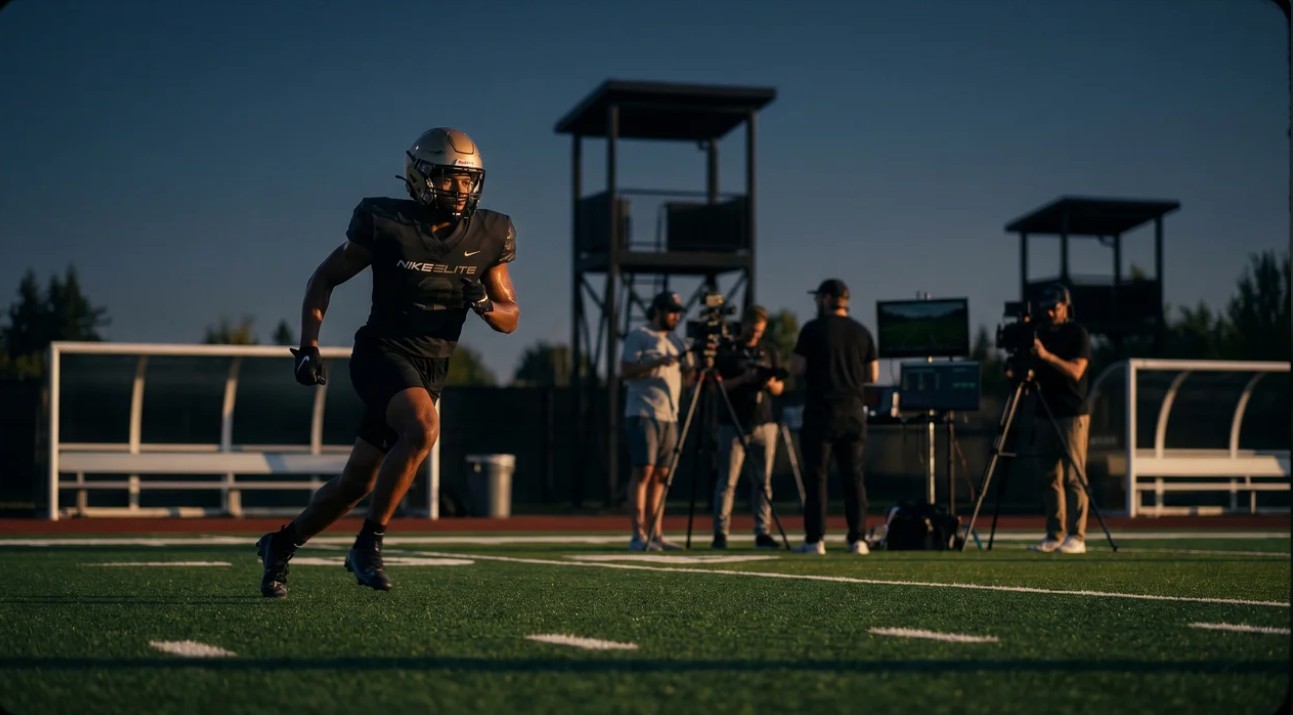
This week, 120 of the country's top high school prospects gather at Nike's campus in Beaverton, Oregon, for The Opening Finals, June 24 through 26. The event pairs a Jordan Brand training camp with a seven-on-seven jamboree and a national tournament, and ESPN will stream the final day. It is one of the most selective showcases in the sport, and not a single college coach can attend in person.
The reason is the calendar. The NCAA dead period now in effect runs through July 31, and during it college coaches cannot have in-person contact with recruits or watch them compete. The Opening Finals lands inside that window, the same as most of the camp and seven-on-seven circuit that fills July. The athletes competing this week are not being evaluated live by the programs recruiting them.
What a showcase produces when no one watches live
That changes what the event is for. When a coach cannot be in the building, a showcase is not an evaluation. It is a production event. What matters is what leaves with the athlete: verified testing numbers, usable film, and reps against real competition that hold up on tape. The Opening built its reputation on that kind of output, and its current model sends performance data and video to Power Four staffs after the fact. The exposure is real, but it arrives later, through distribution, not in the moment.
This is the distinction families lose money on every summer. A brochure that promises exposure during a window when coaches are barred from attending is selling the wrong thing. The value of a summer event is not who is watching from the sideline. It is what the event hands back that an athlete can use.
How a family should weigh a summer event
Most families will never receive a Nike invitation, but the same logic applies to every regional camp, combine, and seven-on-seven tournament between now and August. Before committing time and money, the questions are practical:
- What verified data leaves with the athlete, such as a timed forty, a shuttle, a vertical, and position drills that can be cited later.
- Whether the event produces film an athlete can actually send, not just a participation photo.
- The level of competition, because reps against credible players are worth more than a crowded field of unknowns.
- Who receives the results afterward, and in what form.
The dead period does not make summer events worthless. It clarifies them. Between now and late July, no college coach is evaluating an athlete in person, so the only thing a showcase can do is generate material that travels. Families who measure these events by what they produce, rather than by the promise of who might be watching, will spend their summer budget on the few worth attending and skip the many that are not.