

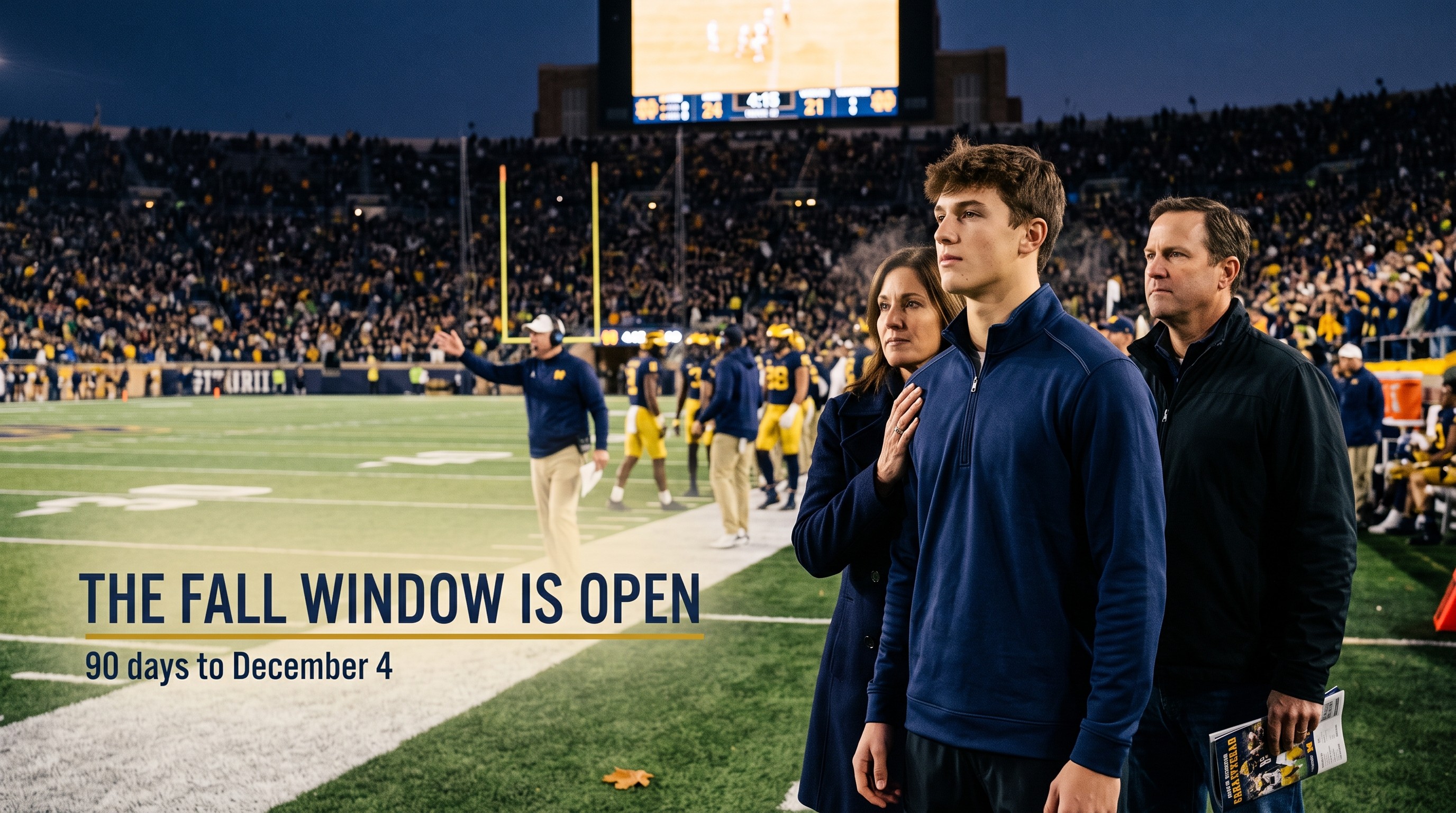
The fall OV window is now open
The full contact period for the 2027 class opened September 1. Programs can now call, text, and visit recruits directly off campus, and game-day official visits are the primary vehicle for uncommitted seniors who are still evaluating programs.
The format matters. A fall official visit puts a family inside a real game weekend. The atmosphere is live. The coaching staff is operating under pressure. And the recruits invited are being evaluated in that context, not just entertained.
This is structurally different from a spring campus visit, where a program hosts a large group of prospects in a lower-stakes setting and the primary goal is relationship-building. A fall game-day official visit is further along in the process.
Why programs have a finite number of available weekends
FBS programs play between six and eight home games each season. Each is a potential official visit window. Programs fill those spots deliberately, with recruits at specific positions where they need to close. These are not open hospitality weekends.
What has also changed is what happens during those 48 hours on campus. Programs now integrate compensation discussions directly into the official visit schedule. Financial terms are discussed before the recruit leaves, sometimes on Sunday morning. The visit is no longer only an atmosphere sell.
The December 4 close date compresses the calendar
The early signing period for the 2027 class opens December 4, 2026. It is a 72-hour window when most FBS commits are expected to sign. That date is now fewer than 90 days away.
A family scheduling fall visits in late October and November has limited runway for deliberation before programs shift their attention to other prospects in the class. Programs track which prospects have visited, how the visit went, and how much time is left before early signing begins. If a visit ends without a commitment, the program moves its calculus.
The sequencing question is the advisory question
Uncommitted families using fall official visits to evaluate programs need to think about sequencing, not just destination. Which programs to visit first, which to save for later, and how the timing interacts with the scholarship offer and compensation discussion all shape how the family moves through the next 90 days.
A visit in September gives a family more time to process and more optionality. A visit in November gives a program less time to respond and less confidence in the family's timeline. Both realities matter.
The advisory question is not just which programs to visit. It is which programs to visit first, and by when, given what the family already knows.