

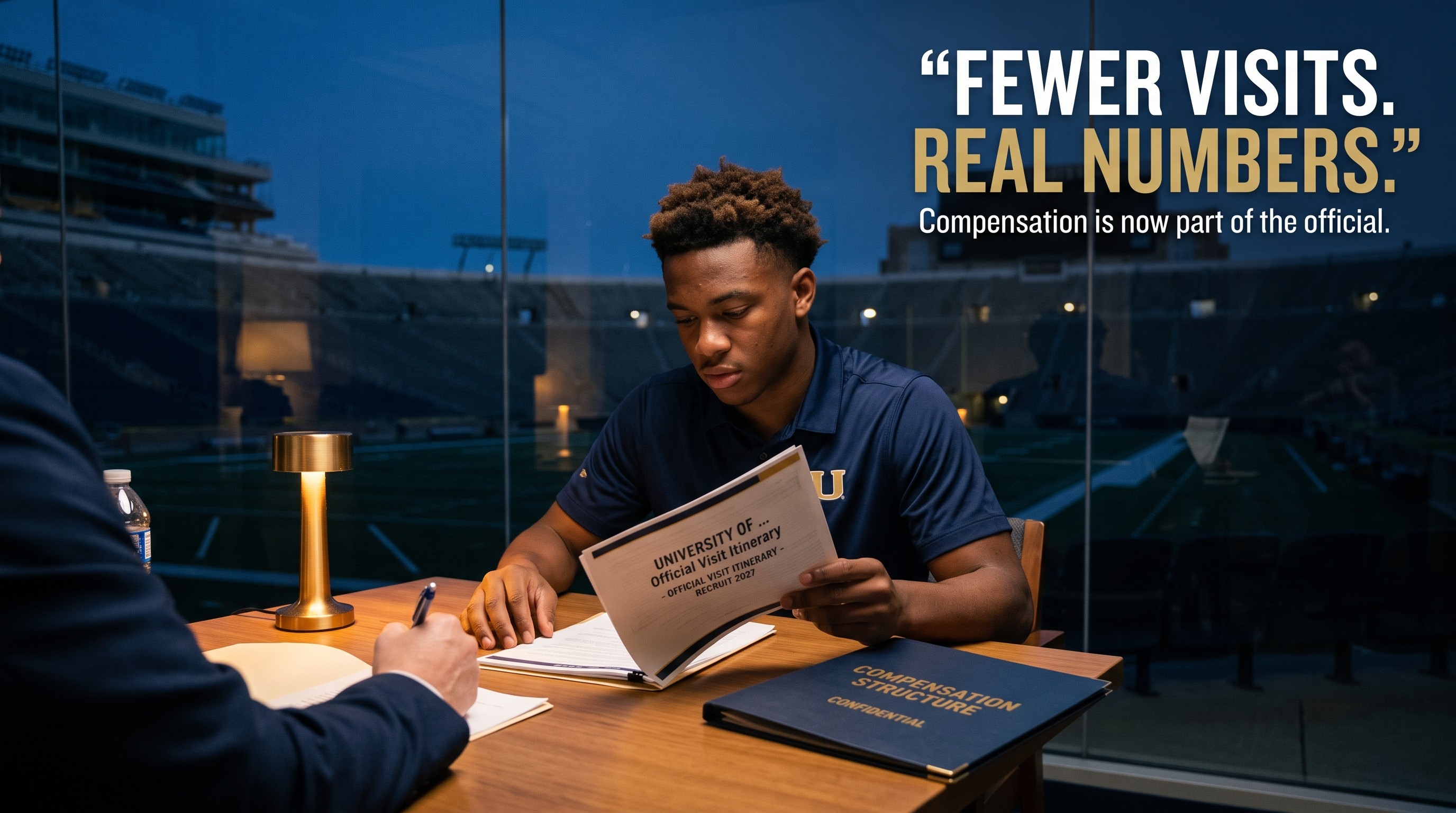
The visit is no longer the pitch
Three years ago, an official visit was the centerpiece of a school’s recruiting strategy. The campus tour, the facility walk-through, the stadium at night. All of it was designed to close the deal.
That model is largely gone.
According to an ESPN analysis published this month, 55 percent of ESPN’s top 300 recruits in the 2027 class were committed by May 19, 2026. That figure was 45 percent one year earlier. Commitments are coming earlier, and most are coming before official visits happen.
USC, which signed 35 recruits in the 2026 class across multiple official visit weekends, plans to host just one for 2027. That decision reflects a broader shift: for programs competing at the top of the recruiting market, the official visit is increasingly a formality rather than a pivot point.
Financial terms now lead
What has replaced the experience weekend is a business meeting.
Georgia Tech head coach Brent Key put it plainly in the ESPN report: “With some kids now, there’s not one thing you can do over those 48 hours that matters one bit. The only question is: ‘What am I getting paid?’”
Programs competing for revenue-sharing-eligible recruits now integrate financial discussions into visit weekends. Some are negotiating compensation terms before the visit happens, specifically to avoid spending resources on a recruit who has already decided elsewhere. At least five prospects in the 2027 class are signing agreements worth more than one million dollars in their first season.
What this means for families this fall
For families preparing for fall official visits, the shift has direct implications.
The financial conversation is no longer separate from the campus visit. Families should expect a discussion of compensation terms as part of the visit agenda. Arriving without a clear sense of what matters to your athlete, and what terms your family is prepared to evaluate, leaves you poorly positioned for that conversation.
The quality of the visitor experience is no longer a reliable signal of a program’s commitment level. A lower-key visit from a well-resourced program may simply reflect the changed nature of recruiting, not diminished interest.
And the calendar has accelerated. With 58 of the top 100 recruits already committed and only seven of ESPN’s 21 five-star prospects still available, uncommitted 2027 families are operating in a market that has thinned considerably. That is context, not a reason for urgency. Knowing where things stand is better than not knowing.
The official visit still matters. What it accomplishes now is different from what it did three years ago.