

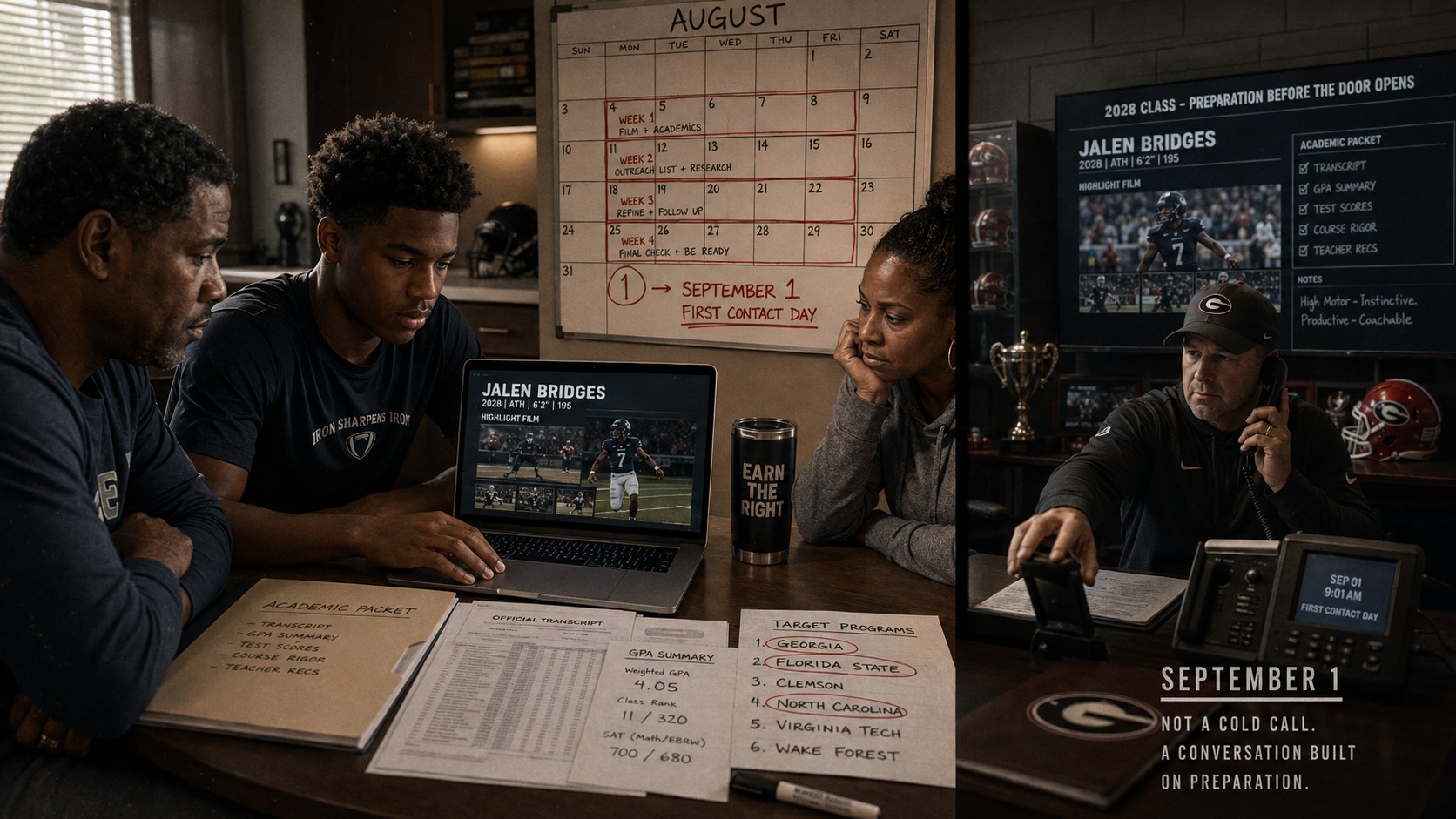
The door opens, but preparation decides whether you walk through it
September 1 is a date with regulatory weight in the 2028 recruiting cycle. It is the first day that Division I coaches can call, text, or otherwise contact a rising junior directly. For a family whose athlete drew attention at a summer camp, it is the moment when that interest can become an actual conversation.
What the date does not do is create interest that was not already building. Most programs make September 1 calls to athletes already in their system, prospects they evaluated in person, reviewed on film, or heard about from a high school coach. The call is a next step, not a first impression.
That distinction matters. The four weeks between now and September 1 carry more influence than the day itself.
What coaches have usually done before they call
By the time a coach dials a 2028 recruit on September 1, significant work has already been done. Something put the athlete on the list. A summer camp appearance, a film review, a conversation with a position coach.
For families of 2028 athletes, that creates a clear question: is the athlete already on the right lists?
Three things tend to determine the answer.
- Film that is current, organized, and easy to access. Coaches working through a September 1 contact list are moving quickly. A highlight reel that is hard to find or poorly organized creates friction. An accessible cut with the best material early works in the athlete's favor.
- Academic information that is current. Coaches ask about GPA, projected test timelines, and class standing in early conversations. Families who have those numbers available signal that the process is being handled with intention.
- Clarity about target programs. Not every September 1 call carries the same weight. Some reflect genuine recruiting interest. Others are courtesy contacts. A family with a clear sense of which programs they are evaluating is better positioned to prioritize time and attention from the start.
What September 1 calls typically are, and what they are not
For families that have not been through a contact window before, the first coach call can feel like something it is not. It is rarely an offer. It is almost always an early signal. The program is confirming interest, inviting continued communication, and sometimes laying the groundwork for a campus visit.
The warmth of a call varies by program. Elite programs making September 1 contact with a 2028 prospect are often working through a long list of serious targets. Mid-level programs actively building a class may communicate more demonstratively. Families benefit from calibrating expectations accordingly.
The more useful question is not whether a program called. It is what the coach knew about the athlete before picking up the phone. A coach who arrives at that call knowing the athlete's film, position, GPA, and camp performance is in a different position than one dialing on volume.
How to use the time before September 1
The recruiting calendar does not stop in August. College coaches are in fall camp, but they can still receive communication from families. A well-organized introduction before September 1 can put a prospect in the category of recruits a coach already knows something about when the window opens. That introduction should include a current film link, basic athletic and academic information, and the athlete's upcoming schedule.
That is the difference between a cold September 1 call and a conversation that confirms existing interest. The preparation that shapes which of those outcomes is more likely is underway now.