

Two recruiting channels, one roster
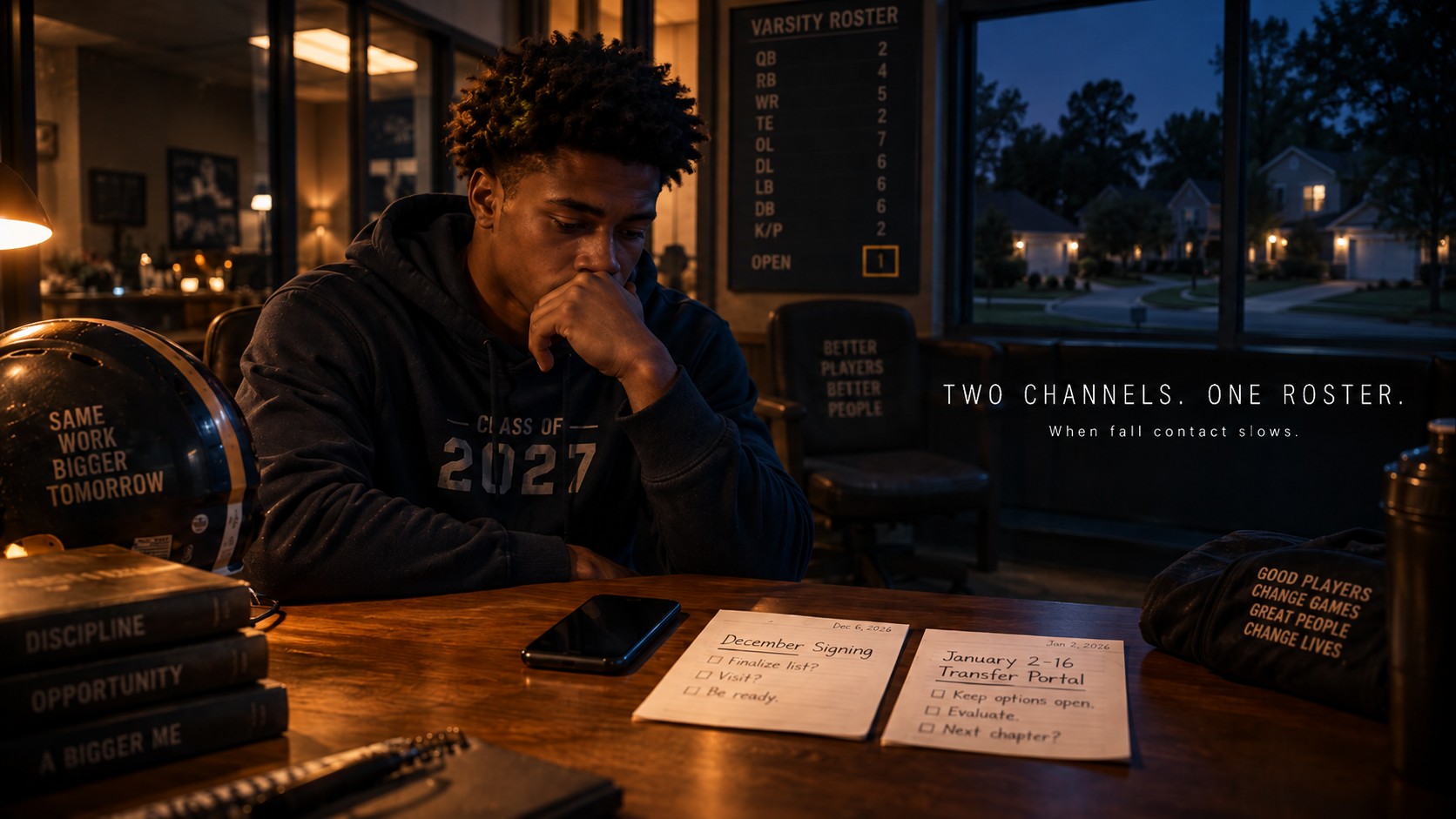
Programs now fill rosters from two sources: high school signing day in December and the January transfer portal window, which runs January 2 through January 16.
That is not new information for most families who have been following recruiting closely. What families sometimes miss is the effect it has on how programs communicate during the fall season.
A program with an open scholarship can fill it with a high school player in December or a portal player in January. Not all programs choose the same answer for every position. And for many programs, that decision is not made until well into the fall.
Why fall contact sometimes slows
Here is the sequence families often experience. A program extends an offer in spring or summer. Contact through August is frequent. Then the season begins, and the calls come less often.
The instinct is to read that shift as a signal that interest has faded. In some cases, that reading is accurate. In others, it is not.
What is often happening is that the coaching staff is now watching its own roster under game conditions. For certain positions, coaches are evaluating whether the need calls for an experienced portal player who can contribute immediately or a high school player who will develop over time. That evaluation does not resolve quickly. Until it does, contact with high school prospects at that position tends to slow.
This is not limited to struggling programs. It happens at programs across the board because the January window exists for every team, and every coaching staff is factoring it into their planning as they watch Week 2 and Week 3 results.
What silence signals and what it does not
There are situations where reduced fall contact reflects reduced interest. A program that offered in April and has been difficult to reach since early June has likely found other answers at that position. That kind of extended quiet deserves an honest reassessment.
But there are also programs carrying a high school offer while simultaneously keeping the portal option open for that same position. For those programs, slower fall contact is a holding pattern, not a withdrawal.
The distinction matters because families at opposite ends of the spectrum can draw the wrong conclusions from the same set of facts. Reading every quiet week as fading interest leads to premature pressure. Waiting indefinitely for urgency that may never appear can mean watching an offer become less available in November.
The questions worth asking now
The most direct question a family can ask in September is not whether a program is still interested. Coaches will say yes. The more informative question is whether this position is in the program's December high school class plan or something they expect to address through the January portal.
A coach who answers that question clearly is signaling genuine intent. A coach who responds vaguely about needing to see how the season develops is keeping the portal option open. That is not necessarily a reason to move on, but it is information worth having before the calendar moves deeper into fall.
For uncommitted 2027 families, October is the window where this clarifies. Programs that are genuinely committed to adding a high school player at your athlete's position will signal it through visit requests and more specific conversations about fit and role. That pattern is worth watching as carefully as anything else on the recruiting calendar.
The fall season is two weeks old. Programs are learning what they actually need. The families who are tracking this most usefully are the ones who understand that a program's silence is not always the answer it appears to be.