

The FBS compression
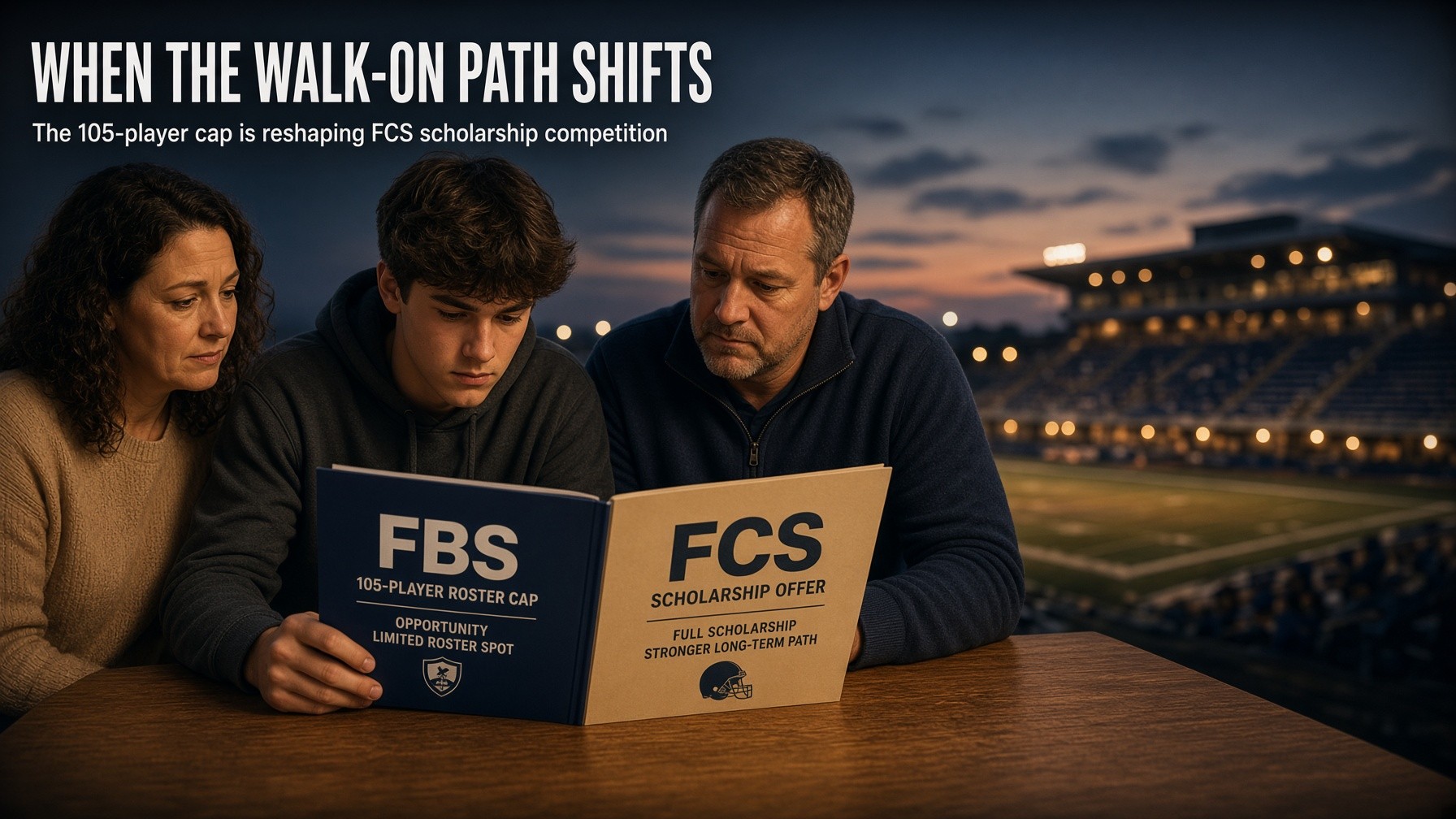
When the 105-player roster cap took effect under the House settlement, it did more than reduce FBS roster depth. It removed a pathway that programs had long used to develop talent without counting against scholarship limits. Athletes who would have walked on at a mid-major FBS program two years ago now have nowhere to land in the FBS without a scholarship offer. Many of them are looking at FCS.
The result is a compressed talent pool at the FCS level. Athletes who are genuinely FCS-caliber are now competing for scholarships against athletes who previously would have been FBS walk-ons. The floor at most FCS programs has risen, and it has risen quickly.
What the shift means for families evaluating FCS interest
For a family whose athlete is fielding FCS scholarship interest this fall, that offer carries more selection weight than the same offer would have two years ago. Programs are being more deliberate about which athletes they pursue at the scholarship level, because every offer counts against a fixed roster in ways it simply did not before.
The reverse is also true. If your athlete has FBS interest without a scholarship offer and is considering FCS as the next option, expect more competition for those scholarships than you would have encountered two recruiting cycles ago. The market at that level has not gotten easier.
The FCS-to-FBS pipeline is real and active
None of this diminishes the legitimate path that FCS programs represent. More than 400 FCS players transferred to FBS programs in 2026. FCS has become one of the more active developmental pipelines in college football, and FBS programs are actively evaluating proven FCS production through the January portal window.
A strong FCS career builds a real track record on actual results, not projection. That is something FBS programs can evaluate directly. The level is legitimate. What has changed is that earning the scholarship in the first place now requires clearing a higher bar than it did when FBS walk-on spots were plentiful.
What families should factor in now
For families navigating offers at or near the FCS level, the fall evaluation period is the right time to understand where genuine interest is coming from and to treat it with the same seriousness you would apply to any recruiting decision.
- FCS programs showing real interest this fall are often working on an earlier timeline than families expect. Waiting until spring can mean losing ground on a scholarship that was genuinely available.
- A scholarship offer from a competitive FCS program in 2026 reflects more deliberate selection than the same offer would have two years ago. It is worth evaluating on its merits, not as a fallback.
- If your athlete holds FBS interest without a scholarship offer, the FCS window requires the same preparation and positioning you would apply to any other serious recruiting pathway.
The structural shift is recent enough that most families have not fully adjusted to it. Understanding it now changes how you read the offers and interest your athlete is already receiving.