

The SEC voted for a uniform contract this week
On Monday, October 12, Southeastern Conference presidents voted to adopt standardized NIL and revenue-sharing contracts across all 16 member schools. The SEC is now the second Power Four conference to do this, following the Big Ten, which established uniform agreements earlier in 2026.
The contracts went into effect immediately. Under the House v. NCAA settlement framework, participating schools can distribute up to $21.6 million directly to athletes across all sports this academic year. The new agreement governs how that money gets committed in writing.
Standardized structure is not the same as identical terms
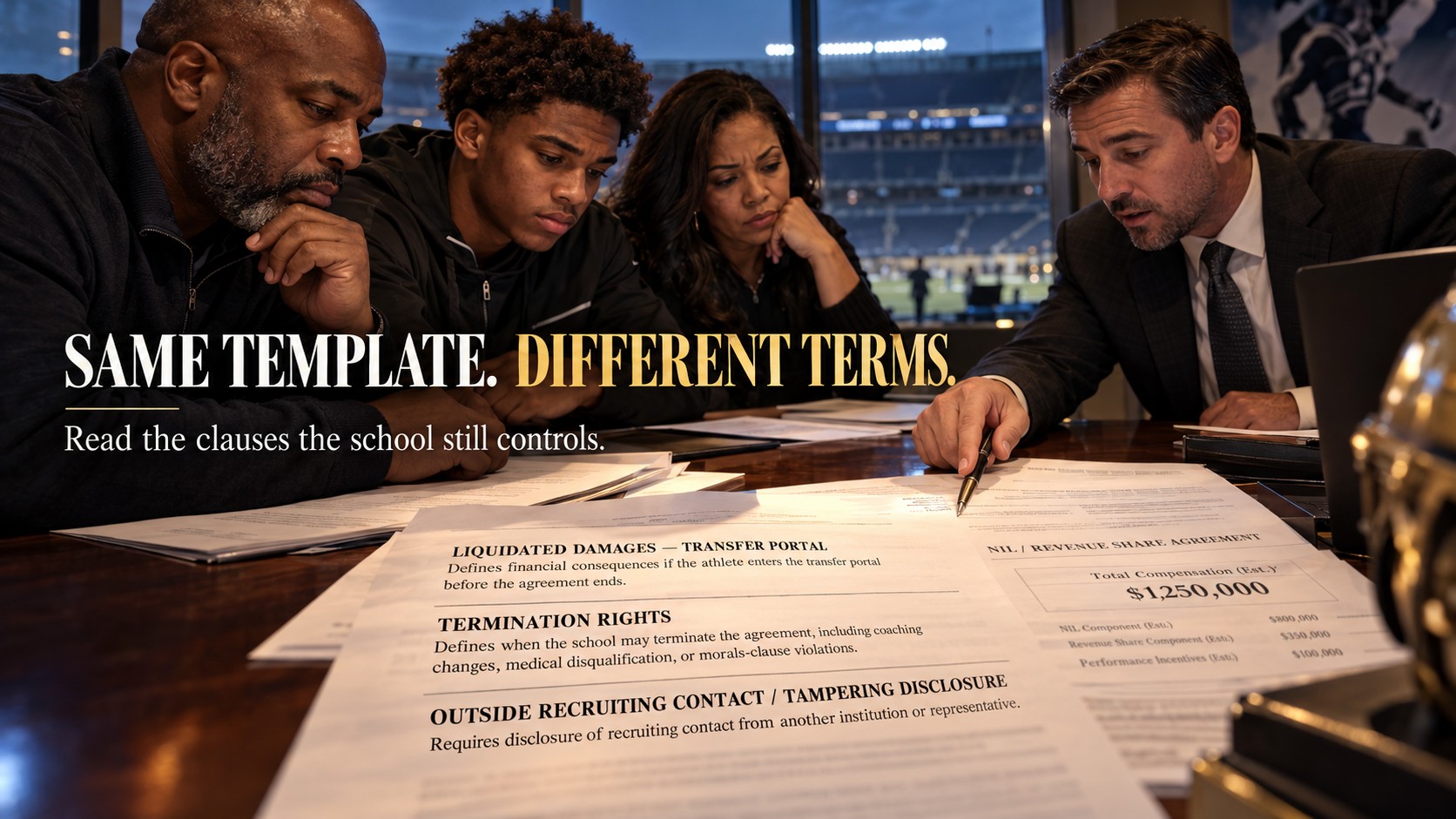
The uniform contract creates a common framework: the same baseline structure across every SEC school. But the contract also includes customizable provisions, and those sections are where the terms actually differ from program to program.
Those customizable provisions include:
- Liquidated damages clauses that apply if an athlete enters the transfer portal
- Termination rights tied to coaching changes, medical disqualification, or violations of morals clauses
- Tampering restrictions requiring athletes to disclose outside recruiting contact to their current school
These are not minor details. They determine what happens when circumstances change: when a coach leaves, an athlete's situation shifts, or a program's interest evolves. The template is standard. The clauses within it are not.
What this means for families evaluating SEC offers this fall
For families currently in conversations with SEC programs, conference standardization is a meaningful development. A common contract structure creates more predictability in what a written agreement will look like. Families considering SEC schools will be reading agreements that follow the same general architecture.
But the decisions that matter most live in the sections each school still controls. Before moving toward commitment at any SEC program, families should be prepared to ask:
- What the liquidated damages provision requires if the athlete enters the portal, and under what circumstances it applies
- Under what conditions the school can terminate the agreement, and whether those conditions are defined precisely
- What the tampering language requires of the athlete before any external recruiting conversation takes place
None of these questions require legal counsel to ask. They do require asking. A standardized contract makes it easier to know where to look. It does not remove the need to look carefully.