

What happened
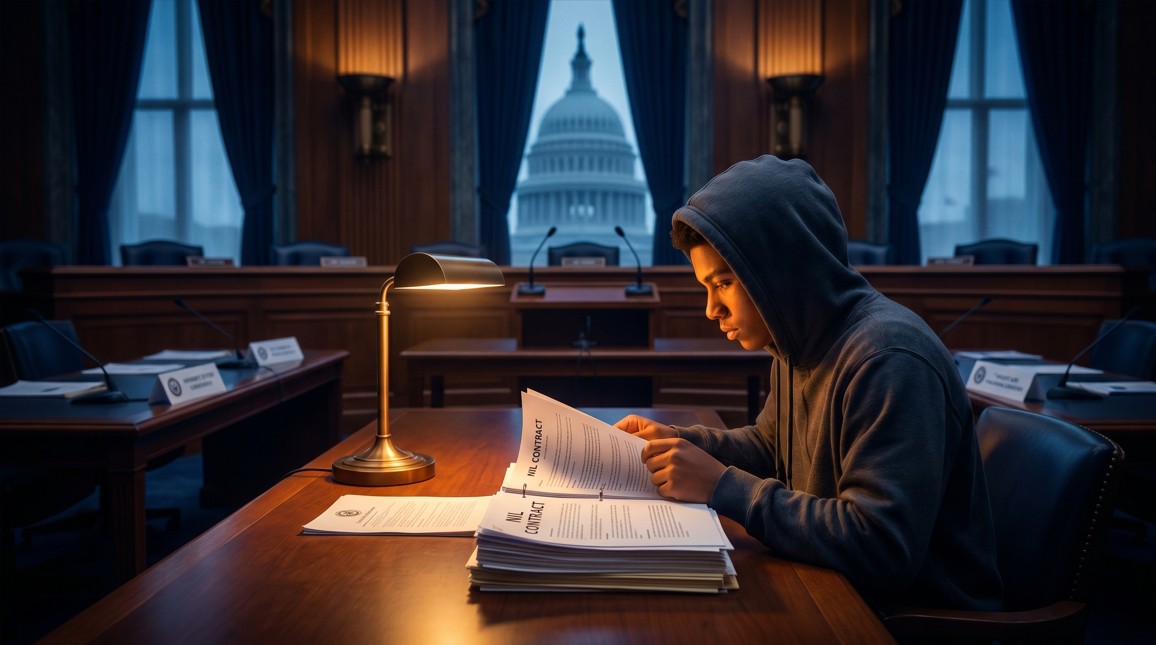
The Senate Commerce Committee passed the Protect College Sports Act on Thursday, June 18, by a 19-9 vote. It is the first time a comprehensive college sports bill has cleared a Senate committee. Chairman Ted Cruz told reporters that Majority Leader John Thune intends to bring the measure to the floor in July, before the August 10 recess. The bill would need 60 votes to pass.
The Big Ten and SEC opposed the measure, citing the media-rights pooling structure and the breadth of the private right of action. The ACC, Big 12, and Pac-12 supported it. Outside college athletics, the NFL, MLB, NFLPA, and NBPA submitted statements backing the bill.
What it would change
The bill is long, but four provisions matter most for families navigating recruiting now.
First, a national NIL standard would replace the current state-by-state patchwork. Contracts would have to specify deliverables and compensation. Agent fees would be capped at five percent, and agents would have to register with their state and be certified by the NCAA before representing an athlete. Athletes would gain a private right of action against agents who misrepresent deals.
Second, the bill establishes a five-year eligibility window that begins at age 19 or high school graduation. That replaces the current five-year-from-first-enrollment framework and creates a different reference point for a 2027 athlete weighing decisions about timing and enrollment.
Third, one transfer would be guaranteed without eligibility loss. A second transfer would require sitting out a year, with exceptions for sport discontinuation and harassment or assault cases. For a future freshman, the practical effect is that repeated portal use would carry a real eligibility cost, narrowing the window programs sometimes describe as a future option.
Fourth, schools reporting $80 million or more in annual athletic revenue would have to maintain women's and Olympic sport scholarship and roster levels at the 2024-25 baseline, whether or not they participate in media-rights pooling. For families with athletes in non-revenue sports at large programs, that floor is the provision worth tracking.
What this means for families now
None of this is law yet. The realistic path runs through a Senate floor vote, a House version, conference reconciliation, and a presidential signature, on a compressed timeline that the August recess and the 60-vote threshold both narrow. Even on the fastest realistic path, the 2026-27 academic year is likely to begin under the current framework.
That means a 2027 family making a decision in the next six weeks should plan against the rules that exist today. Read the bill text rather than headline reactions. If an agent or representative approaches your athlete in the meantime, ask whether they would qualify for registration and certification under the proposed standard. If a program raises a transfer-portal scenario as part of its pitch, note that the proposed rule would narrow that path.
A regulatory change is a planning horizon, not a trigger. The work is to stay informed, document what you are being told, and let the structure clarify before reacting to it.